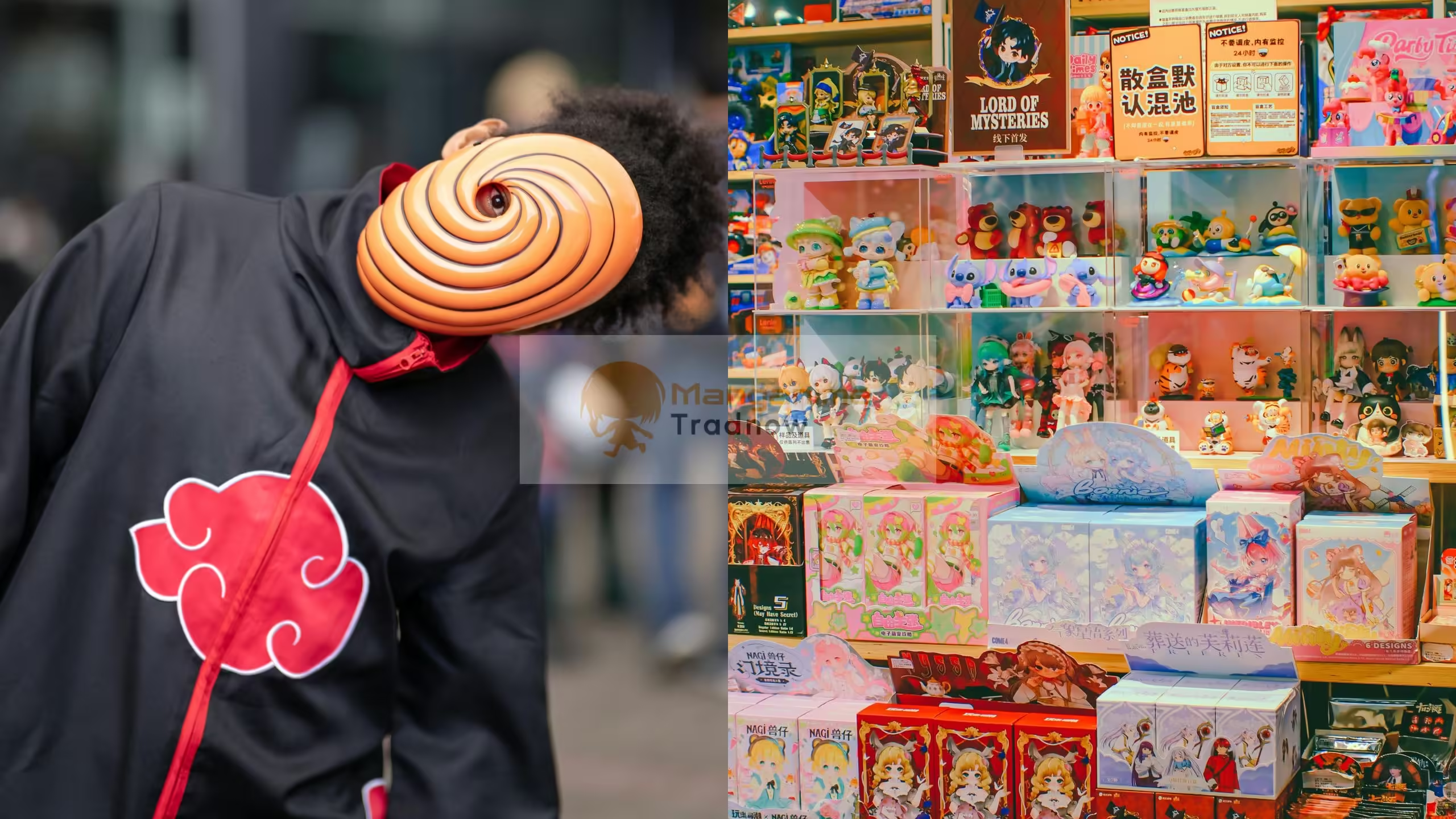
Otaku culture has long shaped how fans engage with their interests, not only through media consumption, but through physical movement and travel. From people planning trips around fan districts and conventions to those seeking out spaces tied to specific subcultures, otaku-driven travel reflects a desire to participate more deeply in the worlds that fans care about.
As this form of travel has grown, so has confusion around the terms used to describe it. Concepts such as otaku tourism, anime tourism, and anime pilgrimage are often mixed together, even though they refer to different motivations and experiences. This lack of clarity makes it difficult to understand what kind of travel is actually being discussed, and what visitors should realistically expect.
This article focuses specifically on otaku tourism as a culture-driven form of travel. By grounding the discussion in cultural analysis and academic research, clarifying how otaku tourism differs from anime pilgrimage and broader anime tourism, and carefully contextualizing real-life locations, the goal is to explain how otaku-related travel works in practice — without reducing it to anime alone.
What Is an Otaku?

In contemporary usage, the term otaku refers to people who have a deep, focused engagement with specific interests, most commonly anime, manga, video games, or related pop-culture fields. Rather than describing casual fandom, the term emphasizes intensity, specialization, and sustained involvement. As explained in cultural analyses published by Japanese cultural institutions and independent researchers, otaku is best understood as an identity shaped by commitment and knowledge, not simply by consumption.
Historically, the word carried negative social connotations in Japan, particularly during the late twentieth century. Over time, however, its meaning evolved. In both Japan and international contexts, otaku has increasingly been reclaimed or neutralized, especially as anime and manga gained global cultural legitimacy. Importantly, not all anime fans identify as otaku, but many otaku engage deeply with anime and related media, which can influence how they travel, spend, and participate in fan communities.
This distinction matters because otaku tourism is not about “fans who like anime,” but about fans whose identity actively shapes their behavior, including travel decisions.
What Is Otaku Tourism?
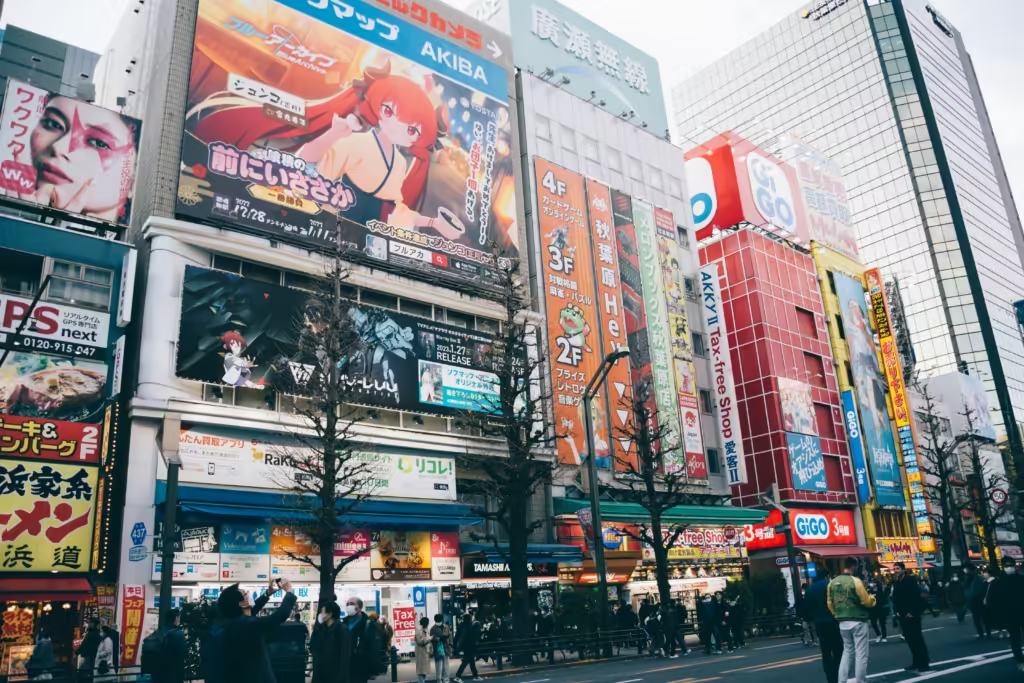
Otaku tourism refers to travel motivated primarily by participation in fan culture itself, rather than by the desire to visit real-world locations depicted in anime narratives. In this context, travel is driven by access to fandom spaces, events, commercial hubs, and shared cultural experiences, not by story accuracy or narrative symbolism.
Within academic tourism studies, otaku tourism is commonly discussed as part of the broader field of anime-related or media-induced tourism. As tourism researcher Takeshi Okamoto demonstrates in his work on anime-related travel behavior, fan-motivated tourism cannot be treated as a single practice. Different forms of anime-influenced travel emerge depending on whether motivation is rooted in narrative attachment, cultural participation, or community engagement.
For this reason, otaku tourism is best understood as a culture-driven form of anime tourism, rather than a story-driven one. It fits naturally within the wider concept of anime tourism, which encompasses all travel influenced by anime and manga culture, while remaining distinct in its motivations and experiences.
Who Are Otaku Tourists?
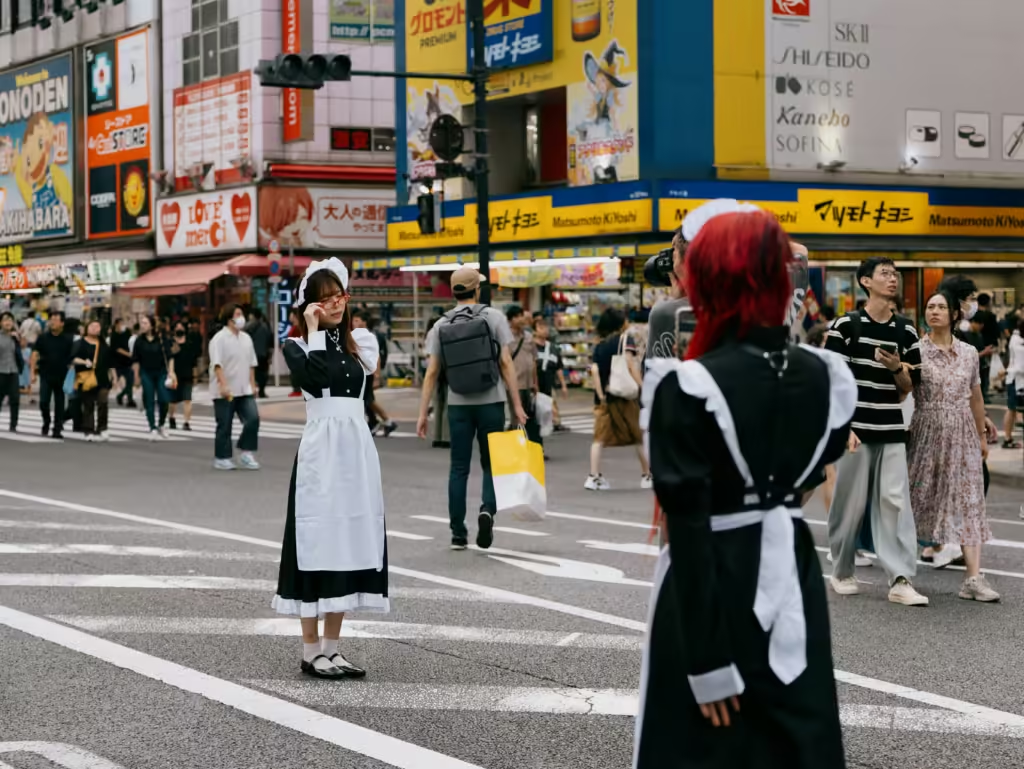
Otaku tourists are individuals whose fan identity directly influences where they travel, when they travel, and what they prioritize during their trips. Rather than seeking places seen on screen, they are drawn to spaces designed for fans, such as districts known for anime commerce, event venues, or locations that function as cultural gathering points.
Research and cultural reporting consistently show that otaku tourists tend to value:
- proximity to other fans,
- access to specialized goods or limited releases,
- and immersion in environments where fan culture is visible and socially accepted.
In this sense, otaku tourism is not accidental or incidental. It is intentional travel shaped by identity, where the destination matters less for its narrative role and more for its cultural function.
What Motivates Otaku Tourism?
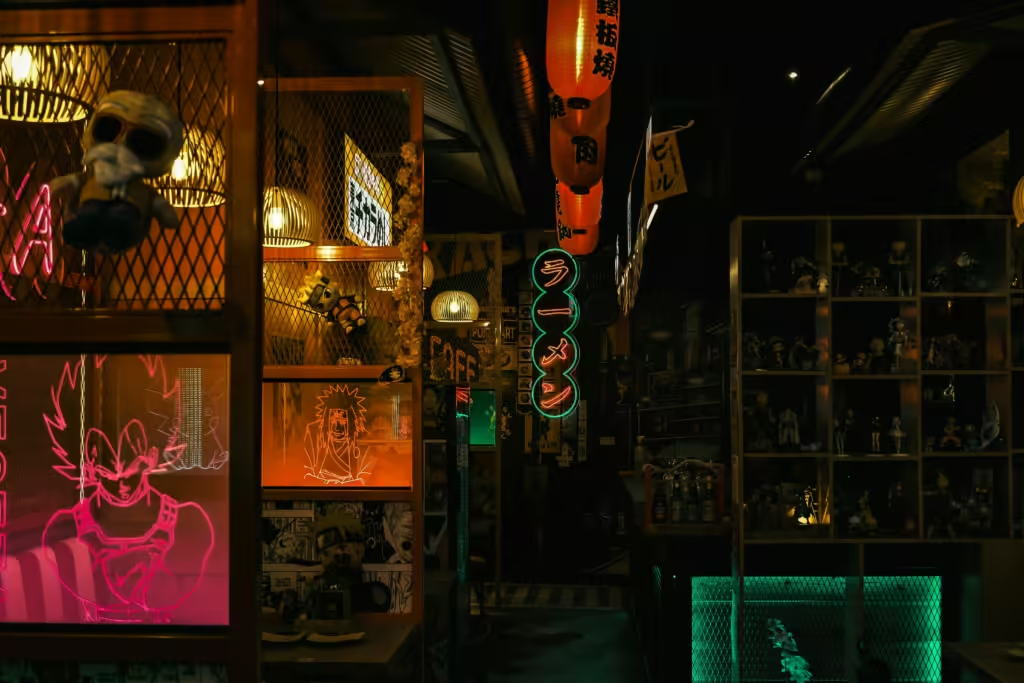
Across both academic research and cultural reporting, several recurring motivations appear in otaku tourism behavior.
One major driver is the presence of commercial hubs that concentrate anime-related shops, merchandise, and media in a single area. These spaces allow fans to access niche products and specialized stores that may not exist elsewhere.
Another key motivation is event-based travel. Conventions, seasonal campaigns, exhibitions, and pop-up collaborations create time-limited experiences that encourage fans to plan trips around specific dates rather than geographic landmarks.
Otaku tourism is also shaped by experience-based venues, such as themed cafés or interactive exhibitions, which offer temporary immersion rather than permanent sightseeing. Finally, many otaku tourists are motivated by community proximity, valuing the experience of being physically present in places where other fans gather.
These motivations reinforce the idea that otaku tourism is fundamentally participatory and social, rather than observational.
Otaku Tourism vs Anime Pilgrimage
Otaku tourism and anime pilgrimage are often confused in online discussions, but research clarifies that they represent distinct forms of fan-motivated travel.
Anime pilgrimage refers to travel driven by a desire to visit real-world locations that appear directly in anime or manga narratives. These journeys are typically motivated by emotional attachment to a story, characters, or scenes, and they often carry symbolic or personal meaning for the traveler. Academic studies describe this behavior as narrative-driven and, in some cases, pilgrimage-like due to its reflective or commemorative nature.
Otaku tourism, by contrast, does not require any narrative connection between a place and a specific anime. Its focus lies in fandom participation, consumption, and shared culture. While pilgrimage emphasizes authenticity and story alignment, otaku tourism emphasizes access and experience.
For readers interested specifically in story-based travel, this distinction becomes important, as that form of travel is more accurately described as anime pilgrimage.
Japan as a Structured Model of Otaku Tourism
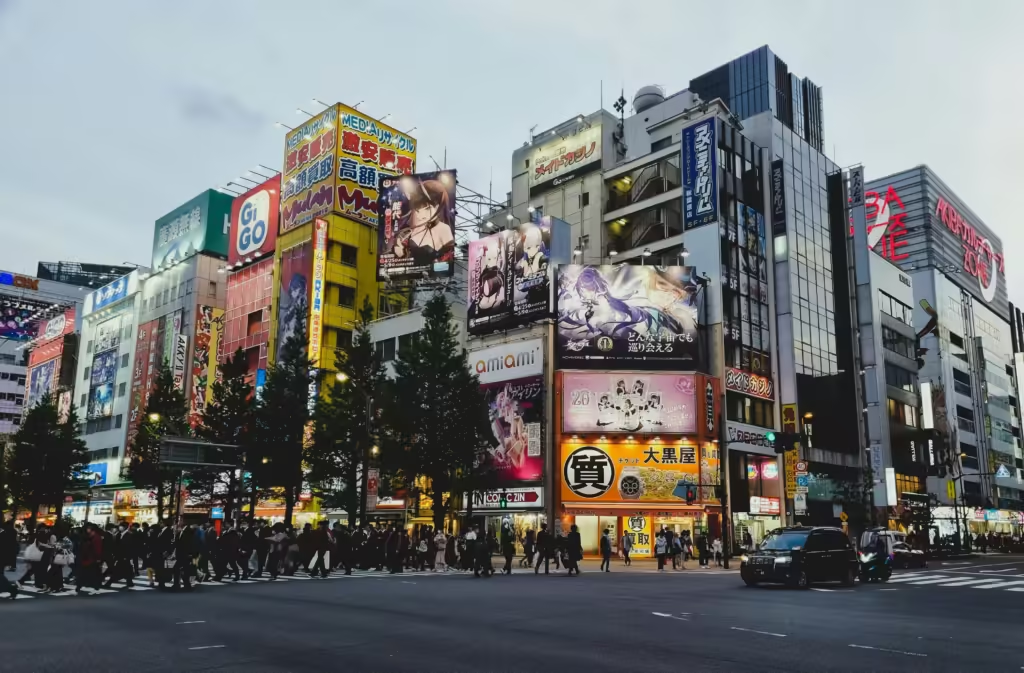
Japan is frequently cited in discussions of otaku tourism not because the phenomenon exists only there, but because Japan offers a highly developed infrastructure that supports fandom-driven travel. Cultural analyses published by Japanese institutions highlight how districts such as Tokyo’s anime-focused commercial areas evolved into concentrated ecosystems of shops, events, and services catering to fans.
What makes Japan a useful model is not the presence of anime itself, but the long-term integration of fan culture into urban space. Otaku tourism functions efficiently in this environment because transportation, retail, and event planning are already aligned with fan demand.
This does not make Japan the definition of otaku tourism. Rather, it demonstrates what happens when fan culture is supported by sustained infrastructure.
Otaku Tourism Beyond Japan
Otaku tourism is not confined to Japan, and treating it as such would ignore how global fandom operates today. Outside Japan, otaku tourism often appears in temporary or event-based forms, such as international anime conventions, traveling exhibitions, or pop-up experiences.
In these cases, destinations become meaningful not because of long-term cultural infrastructure, but because fans gather there at specific moments. Research into fan-motivated travel supports this view, showing that community presence and shared experience can temporarily transform ordinary cities into anime-related destinations.
This global dimension reinforces the idea that otaku tourism is a behavioral phenomenon, not a geographically fixed one.
How Otaku Tourism Fits Into Anime Travel Overall
Anime-influenced travel exists on a spectrum rather than as a single category. At one end lies otaku tourism, driven by cultural participation, events, and fan spaces. At another lies anime pilgrimage, driven by narrative attachment and real-world story locations. Both fall under the broader umbrella of anime tourism, which includes all forms of travel influenced by anime and manga culture.
Many travelers move between these forms without consciously labeling them. Understanding the differences helps clarify motivations, expectations, and planning needs, and it allows fans to better identify the type of experience they are seeking.
Summary Table: Anime Tourism vs Otaku Tourism vs Anime Pilgrimage
| Aspect | Anime Tourism | Otaku Tourism | Anime Pilgrimage |
|---|---|---|---|
| Core definition | All travel influenced by anime and manga culture | Travel driven by participation in otaku / fan culture | Travel to real-world locations that appear in anime stories |
| Scope | Broad umbrella concept | Mostly overlaps with anime tourism, but can extend beyond it | Subset of anime tourism |
| Primary motivation | Interest in anime-related travel in general | Fandom participation, culture, community | Narrative attachment and story authenticity |
| Driven by story locations | Sometimes | No | Yes |
| Driven by fan culture | Sometimes | Yes | Occasionally |
| Main focus | Anime-related travel as a whole | Events, hubs, experiences, consumption | Real-life places depicted in anime |
| Type of experience | Mixed | Cultural and commercial | Symbolic and narrative |
| Emotional connection | Variable | Community-based | Strong personal or emotional attachment |
| Typical destinations | Japan and abroad | Urban fan districts, event venues, temporary pop-up locations | Real towns, streets, landmarks |
| Urban vs rural | Both | Mostly urban | Often rural or residential |
| Commercial aspect | Moderate | High | Low to moderate |
| Event-based travel | Sometimes | Very common | Rare |
| Seasonality | Flexible | Often tied to events | Tied to personal interest or series popularity |
| Planning complexity | Low to medium | Medium | Medium to high |
| Repeat visits | Possible | Common | Less common |
| Audience profile | Anime fans and travelers | Dedicated fans / otaku | Story-focused anime fans |
| Examples of activities | General anime sightseeing | Shopping, conventions, themed cafés | Visiting specific anime locations |
| Cultural immersion | General | High | Contextual |
| Narrative importance | Optional | Minimal | Central |
| Community interaction | Limited | High | Low |
| Japan dependency | Strong but not exclusive | Strong but not exclusive | Strong but not exclusive |
| Global presence | Global | Global | Global but more niche |
| Best described as | An umbrella category | Culture-driven travel | Story-driven travel |
This section is based on a combination of academic research on anime-related travel, cultural analyses published by Japanese institutions, and verified travel reporting. Distinctions between otaku tourism, anime tourism, and anime pilgrimage are drawn from tourism research that focuses on fan motivation and behavior rather than destination marketing.
How Real-Life Anime Locations Are Selected in This Guide
Not every anime that feels realistic is tied to a real-world place you can actually visit. While many series draw inspiration from real environments, this guide focuses only on locations that can be clearly identified, verified, and meaningfully connected to the anime itself.
To avoid confusion and misinformation, the locations included here meet at least one of the following conditions: they appear directly and recognizably on screen, or they have been explicitly confirmed by creators, studios, or official sources. Places that are only loosely “inspired by” real areas, or commonly assumed by fan speculation alone, are intentionally excluded.
This approach is meant to be practical and honest. Some popular fan-claimed locations may be missing, not because they are unimportant, but because their connection to an anime cannot be confirmed with sufficient clarity. Where a location has changed, become inaccessible, or differs noticeably from its animated depiction, those limitations are stated clearly.
The goal of this section is simple: if you decide to visit a place based on this guide, you should know what actually exists, what still matches the anime, and what to expect today.
Famous Anime With Real-Life Locations
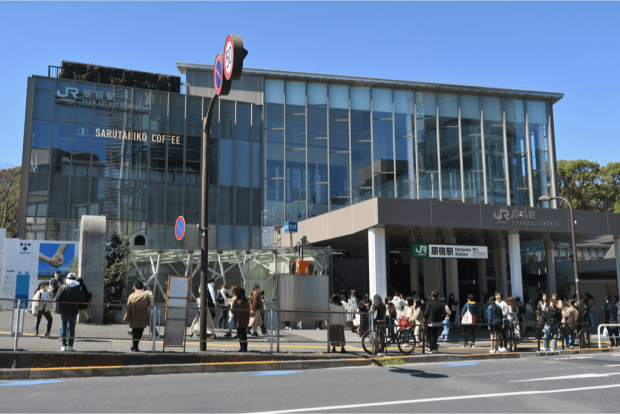

Some anime go beyond fictional worlds and place their stories in real, visitable locations. This form of anime travel, often described as anime pilgrimage, is driven by a desire to see places that appear directly on screen and to experience how fiction and reality overlap.
Rather than listing every possible example, this section highlights well-documented cases and points you toward in-depth guides where each location is explored properly, with context, maps, and practical visit details.
Your Name (Kimi no Na wa)
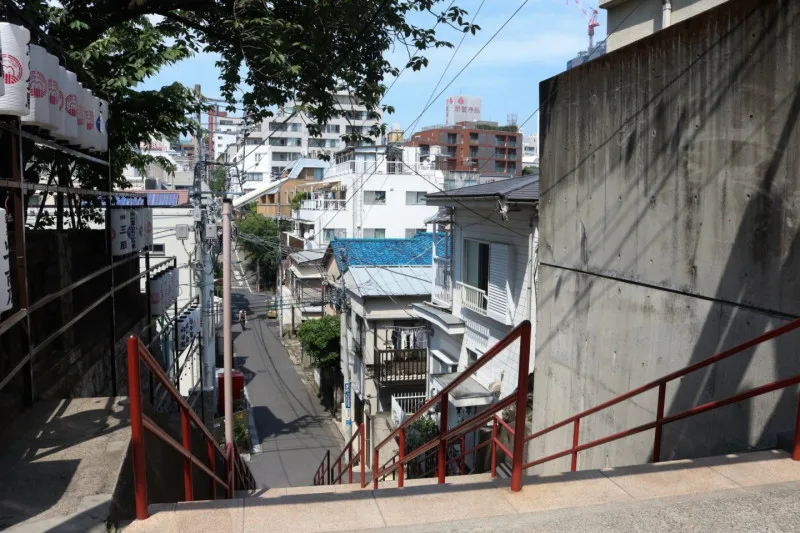
Makoto Shinkai’s film is one of the most cited examples of anime pilgrimage, largely because many of its Tokyo scenes are set in clearly identifiable real locations. The most famous of these is the staircase near Suga Shrine in Yotsuya, which appears almost unchanged in the film.
If you’re interested in how these Tokyo locations connect to the story, what still matches the anime today, and how fans typically approach visiting them, see our full guide to Your Name real-life locations.
Erased
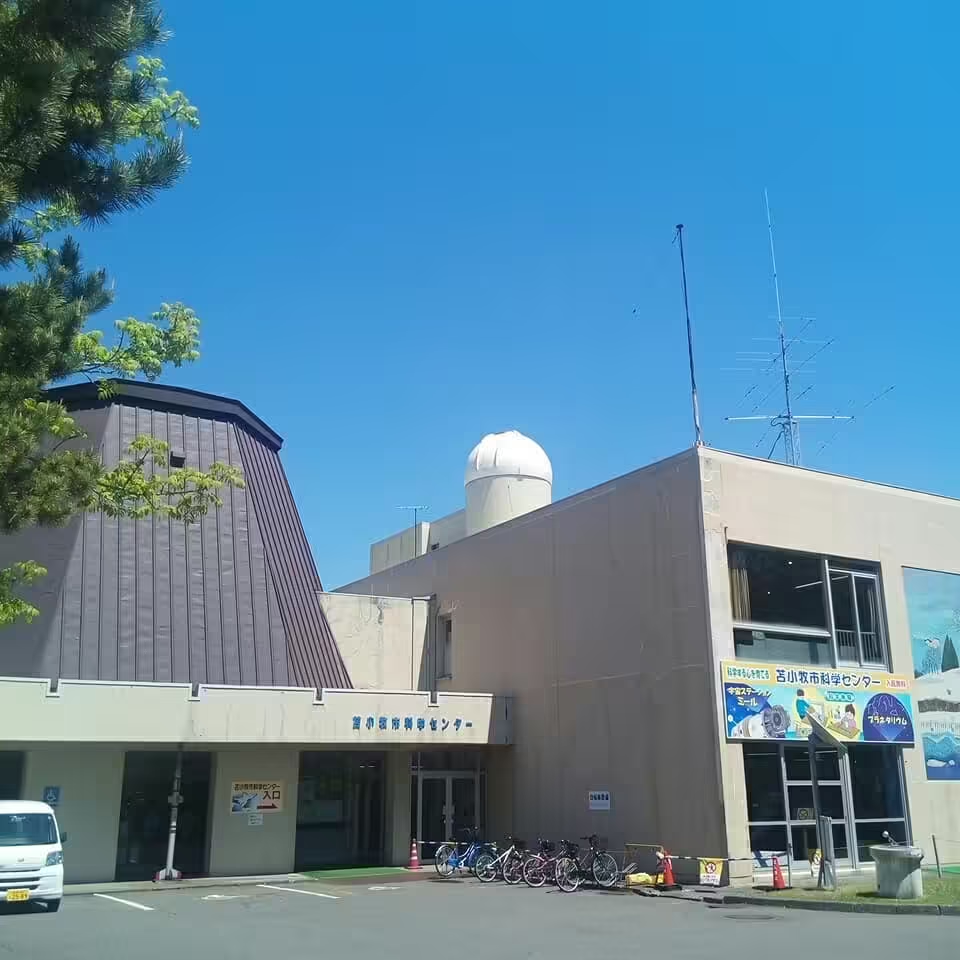
Unlike many anime set in fictional towns, Erased is strongly tied to the real city of Tomakomai in Hokkaido. The series uses recognizable streets, neighborhoods, and a winter atmosphere that closely reflects the real location, which is why it’s often cited in discussions of grounded anime settings.
For a detailed breakdown of how Tomakomai shaped the series, which places can still be visited, and what has changed since the anime aired, read our complete guide on Erased real-life locations in Tomakomai.
Hyouka
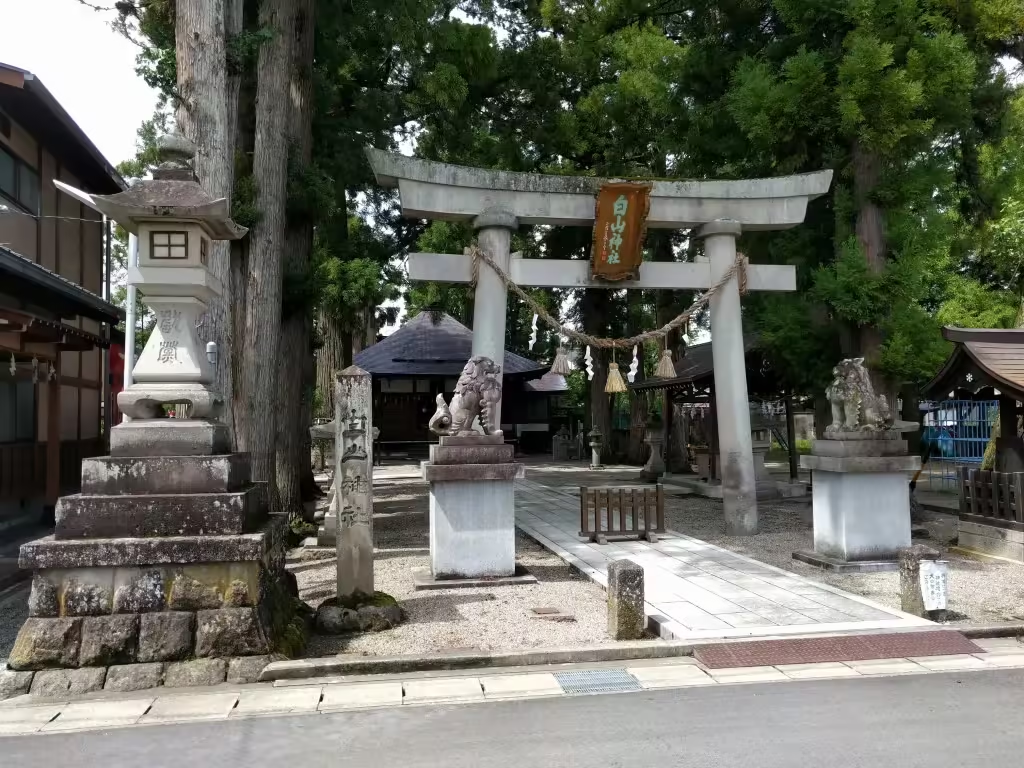
Hyouka is frequently referenced as a textbook example of anime pilgrimage because of how faithfully it depicts the city of Takayama in Gifu Prefecture. From traditional streets to everyday urban details, the anime mirrors real locations with minimal alteration.
If you’re curious about how Takayama appears in the series, which landmarks are most relevant, and whether they can still be visited today, explore our in-depth guide to Hyouka real-life locations in Takayama.
Jujutsu Kaisen
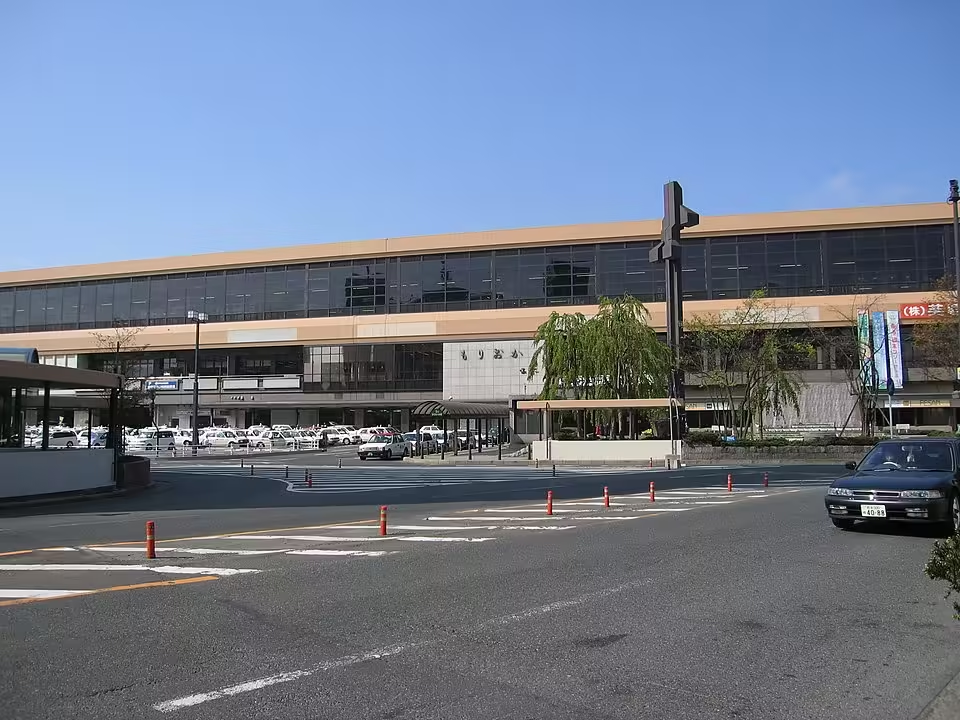
While Jujutsu Kaisen features many supernatural elements, some arcs are anchored in real urban environments. The Shibuya Incident arc, in particular, uses central Tokyo locations that are immediately recognizable, even though scale and destruction are heavily stylized.
For a closer look at how Shibuya is represented in the anime, what matches the real district, and what is exaggerated for storytelling, see our article on Jujutsu Kaisen real-life locations in Shibuya.
Call of the Night
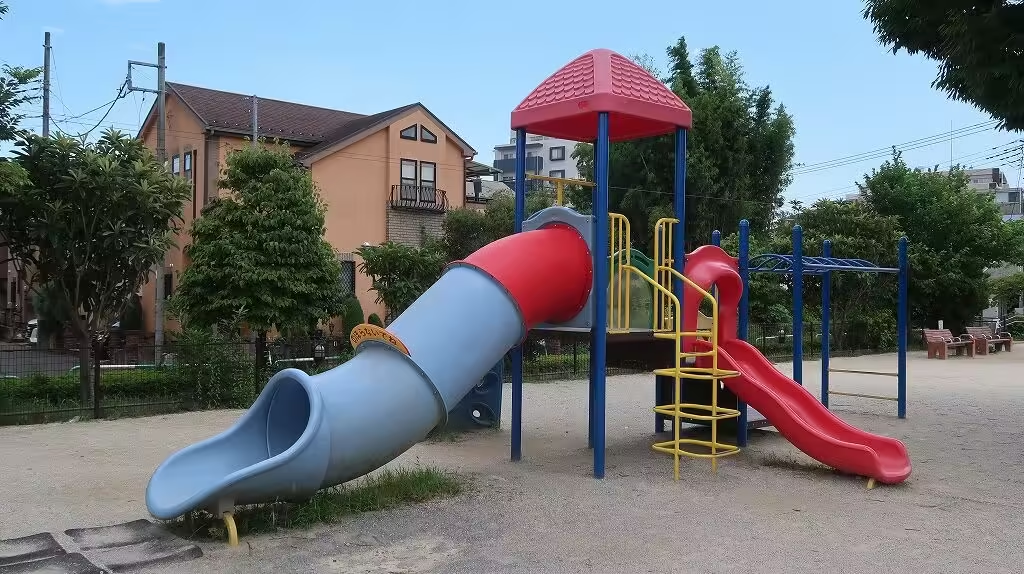
Rather than focusing on specific landmarks, Call of the Night captures the atmosphere of Tokyo at night through a blend of real residential streets, quiet alleys, and everyday urban details. The locations are not one-to-one reproductions, but they are rooted in real neighborhoods.
If you want to understand how the anime’s nighttime mood connects to actual Tokyo streets, and how fans approach visiting these areas respectfully, read our guide on Call of the Night real-life locations.
JoJo’s Bizarre Adventure

Certain parts of JoJo’s Bizarre Adventure explicitly take place outside Japan, using real European cities as narrative settings. Golden Wind, for example, is set in Italy and incorporates recognizable cityscapes, even though distances and routes are stylized for dramatic effect.
For a focused look at which Italian cities appear in the series and how they are portrayed, see our breakdown of JoJo’s Bizarre Adventure real-life locations in Italy.
Other Forms of Otaku Tourism Beyond Real-Life Anime Locations
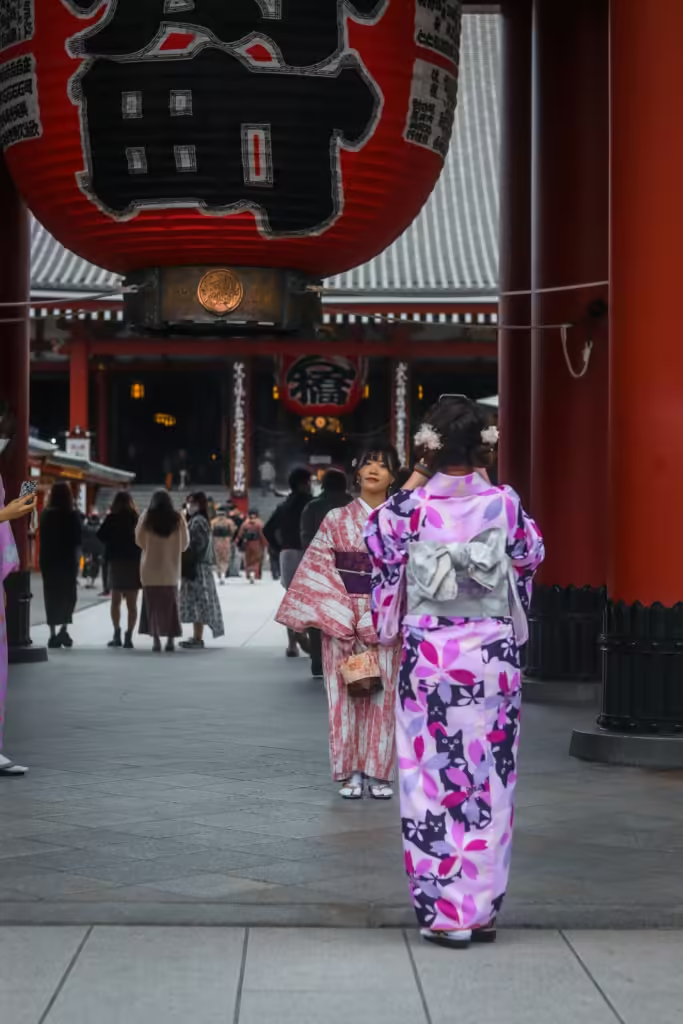
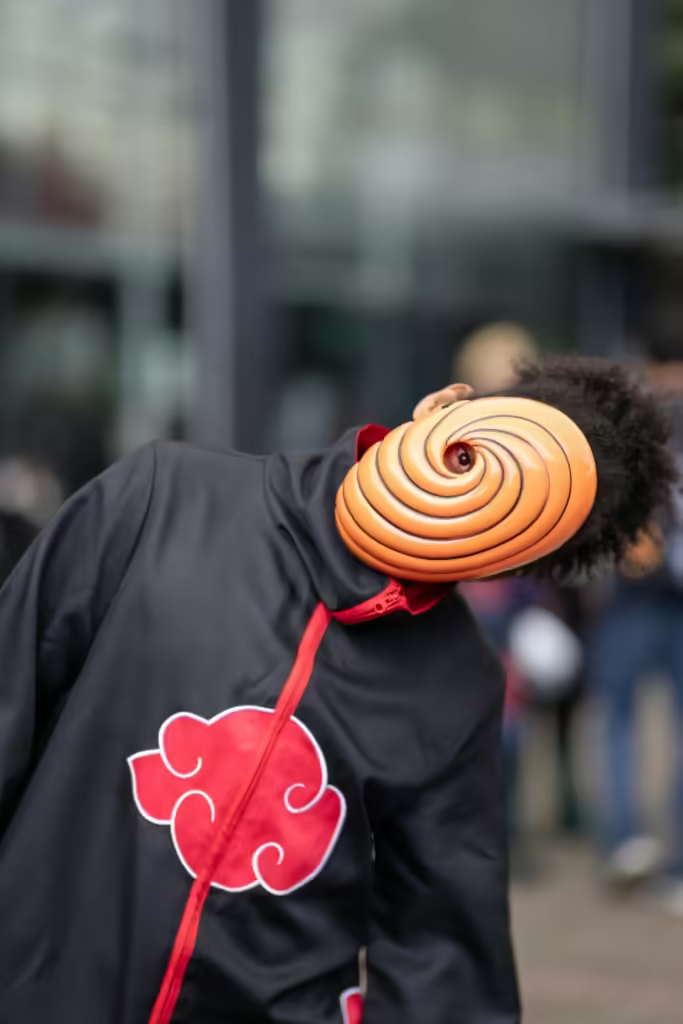
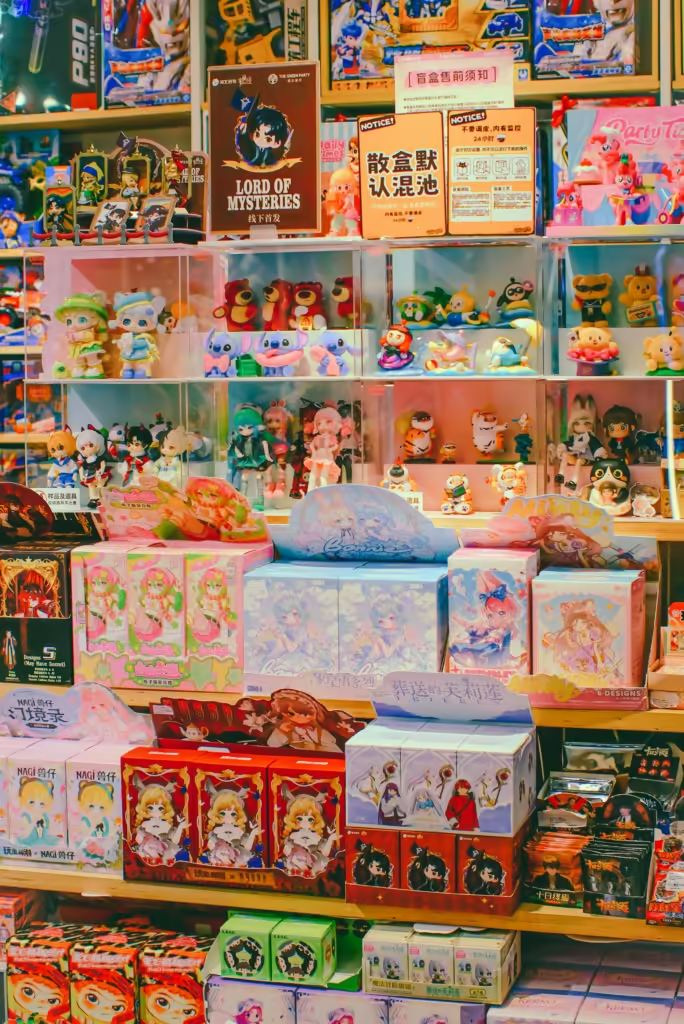





Otaku tourism is not limited to visiting places shown in anime. In many cases, travel is motivated by participation in fan culture itself, rather than by narrative settings or identifiable real-world locations. Below are some of the most common forms of otaku tourism that exist independently of anime pilgrimage.
- Traveling to fan districts centered on anime, manga, games, or pop-culture retail.
- Planning trips specifically to attend anime, manga, gaming, or pop-culture conventions, often to participate in cosplay events and gatherings.
- Visiting limited-time pop-up stores, themed exhibitions, or collaboration cafés.
- Traveling to access exclusive, rare, or second-hand merchandise at specialty stores.
- Visiting arcades, retro gaming spaces, or esports-related venues.
- Traveling for idol concerts, voice actor events, anisong performances, or fan meetings.
- Visiting museums or exhibitions dedicated to manga artists, animation studios, or game history.
- Traveling primarily to participate in offline fan meetups or community-organized events.
Outro
Otaku tourism is ultimately defined by motivation rather than medium. Whether the interest is anime, manga, games, or another aspect of otaku culture, travel in this context is driven by participation, community, and proximity to spaces that support fan identity. Understanding this distinction helps clarify why otaku tourism cannot be reduced to visiting anime locations alone.
When approached thoughtfully, otaku-driven travel offers more than surface-level sightseeing. It becomes a way to engage with cultural spaces while remaining aware of their real-world context and limitations. By separating otaku tourism from anime pilgrimage and from broader anime tourism, fans can better identify the experiences they are seeking and approach them with clearer expectations and greater respect for the places involved.



Show Your Work
Whether you are a professional or an amateur, we will love to see your artwork. So don't hesitate to remove your cats from your box right away