
Winter in Erased does not feel dramatic. It feels familiar in a way that is unsettling.
Snow falls on ordinary streets. Houses sit quietly behind thin fences. Children walk alone because no one thinks twice about it. Nothing in these places signals danger, and that is exactly the problem. Erased does not rely on stylized towns or exaggerated scenery to tell its story. Its unease comes from how easily the events could belong to a real neighborhood, one you might pass through without ever stopping.That realism is why so many fans search for Erased real life locations, expecting a list of places to visit.
But the power of Boku Dake ga Inai Machi lies elsewhere. The setting matters not because it is visitable, but because it is believable. Real towns, real streets, real silence give weight to the story’s themes of memory, neglect, and childhood vulnerability.
To understand Erased, you don’t need exact addresses. You need to understand why these places work.
Why Erased Needed a Real Place
Stories about childhood trauma often hide behind distance. Fictional towns, exaggerated settings, or stylized worlds give viewers a sense of safety, a subtle reminder that what they are watching is not real. Erased refuses that comfort.
The central tension of Erased depends on recognition. Abuse, neglect, and violence are not portrayed as sudden shocks but as things that happen quietly, over time, in places that look completely normal. For that to feel convincing, the setting cannot draw attention to itself. It has to resemble the kind of town where people assume someone else is paying attention.
This is why Boku Dake ga Inai Machi grounds its story in a believable Japanese environment rather than a fictionalized one. Realistic streets and familiar residential layouts remove the emotional buffer that fantasy provides. When harm unfolds in a place that looks lived-in and routine, it becomes harder to dismiss it as an exception or a narrative device.
A real-world inspired setting also reframes responsibility. In Erased, nothing about the environment signals danger loudly enough to demand intervention. Adults pass by. Systems function as expected. The town does not feel broken, which is precisely why the failures within it are so disturbing.
By anchoring the story in places that feel authentic, Erased shifts the question from “how could this happen?” to “how often does this happen without being noticed?” The realism of the setting does not just support the plot. It exposes the uncomfortable truth that these stories do not require extraordinary circumstances, only ordinary places and prolonged silence.
Hokkaido as the Emotional Backbone of Erased
The setting of Erased works because it follows the everyday logic of Hokkaido rather than trying to dramatize it. Northern Japan shapes how people move, wait, and respond. Winters are long, light is often muted, and time feels stretched rather than urgent. None of this is unusual for the region, and that normality is precisely what gives the story its weight.
Hokkaido’s residential towns sit in an in-between space. They are not remote villages, but they are not dense urban centers either. Streets are wide enough to pass through without interaction. Houses are close enough to signal life, yet distant enough to preserve privacy. Silence is not a warning sign; it is the default state. This spatial balance explains why the Erased anime setting in Japan feels so plausible. Nothing in the environment demands attention, which means problems can exist without being immediately noticed.
This atmosphere directly supports the story’s themes. In Boku Dake ga Inai Machi, neglect is not framed as cruelty, but as accumulation. Adults rely on routines because routines usually work. Children move independently because that is culturally and practically normal. The setting does not create danger; it creates the conditions where danger can persist quietly.
When people search for Erased Hokkaido locations, what they are often responding to is not a specific landmark, but a feeling of restrained realism. The anime avoids visual emptiness or exaggerated isolation. Instead, it reflects the subdued rhythm of suburban Hokkaido, where winter slows reactions and distance dulls urgency.
That is why the setting stays with viewers. The town in Erased feels interchangeable with countless real places in northern Japan. It is not memorable because it is unique, but because it feels possible.
From Anime Frame to Real Street: How Erased Uses Real Places
Before talking about Boku Dake ga Inai Machi real places, it’s important to understand how Erased approaches realism. The anime does not recreate specific streets or buildings with documentary precision. Instead, it builds its world from composite observation.
Backgrounds in Erased are assembled from multiple real environments that share the same spatial logic: similar residential layouts, comparable street widths, familiar school-adjacent spaces, and the subdued winter light typical of northern Japan. This is why many viewers feel the setting is instantly recognizable, yet struggle to identify a single, exact match.
This approach also explains the confusion around Erased filming locations anime searches. Unlike live-action productions, the anime was not “filmed” in one place. Its locations are inspired rather than recorded. The goal was never accuracy for mapping, but credibility for emotion.
By blending real-world references into a cohesive whole, Erased creates a town that feels authentic without being traceable. The environment works because it mirrors how real places are remembered: partially, imperfectly, and filtered through experience. What matters is not whether a street exists exactly as shown, but whether it behaves like a real street would.
That distinction is key. Erased is grounded in reality not through precision, but through familiarity.
Read Also: Exploring the 32 Best Anime Opening Theme Songs
The Real-Life Foundation of Erased: Tomakomai and Hokkaido’s Everyday Quiet
Tomakomai City as a Primary Real-World Model

When people look for Erased anime real town, Tomakomai City in Hokkaido consistently comes up. Not because the anime recreates it street by street, but because Tomakomai embodies the kind of environment Erased needs to feel believable. It is a working city with suburban edges, a place built for daily life rather than spectacle. Residential blocks extend outward with little visual drama. Streets are practical. Movement is functional.
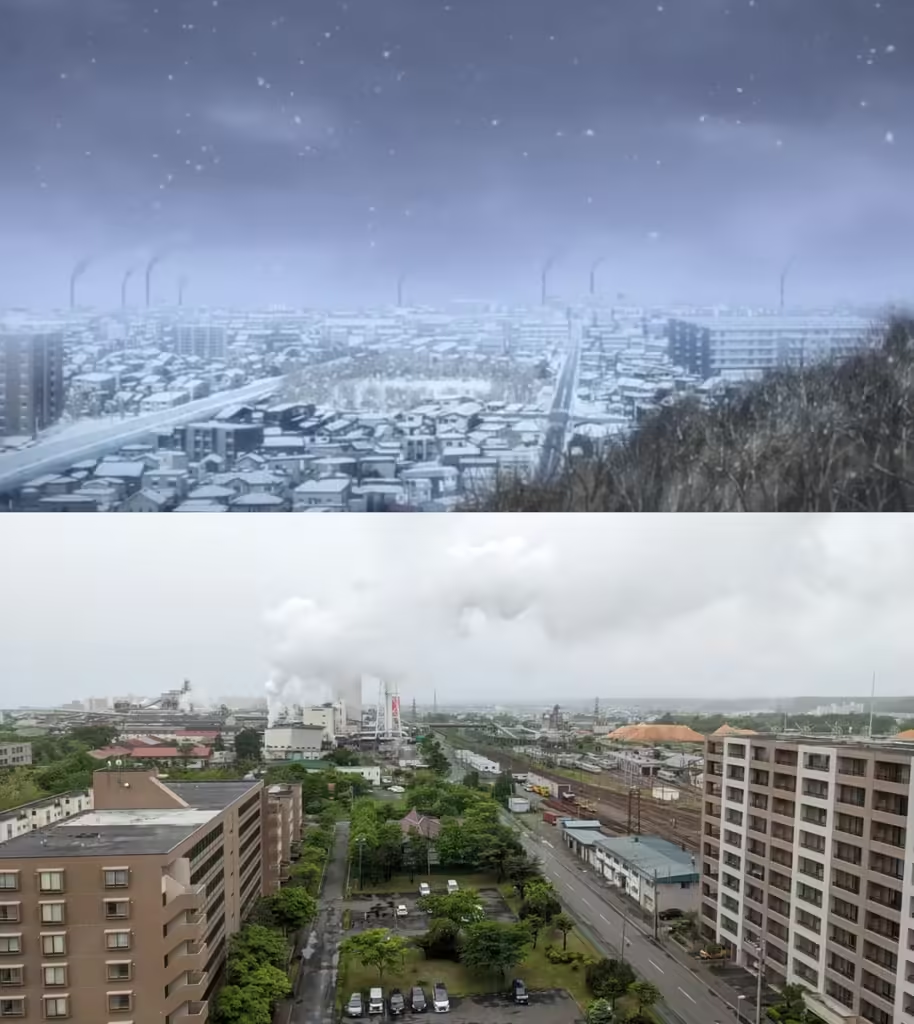
This matters. The childhood town in Erased does not feel isolated or abandoned. It feels occupied but unobserved. Tomakomai fits that logic. You can pass through its neighborhoods without drawing attention, without being seen or remembered. It is the kind of place where people assume normalcy, where routines take precedence over curiosity.
That quality is essential to the story’s tension. The setting does not alarm you. It reassures you. And that reassurance is what allows harm to go unnoticed.
Tomakomai Municipal Misono Elementary School
When Satoru is pulled back into the past by his “Revival” ability in Erased, one of the first places he returns to is his elementary school. Many fans associate this setting with Tomakomai Municipal Misono Elementary School, often cited as a likely real-world reference for the school depicted in the anime.
At a glance, the resemblance is easy to understand. The building’s scale, its straightforward design, and its placement within a quiet residential area closely match the grounded, everyday atmosphere Erased is known for. It doesn’t look cinematic or exaggerated. It looks like a real school you might walk past without giving it much thought, which is exactly why it works so well in the story.
Outside the school grounds, you can also spot elements that recall the playground where Satoru and his friends spend time together, a space that appears both in the series itself and in the opening. While visitors can’t enter the school grounds, standing outside and comparing the exterior with the anime’s scenes offers an interesting perspective. Not as a checklist stop, but as a reminder of how Erased draws its emotional weight from ordinary, believable places.
Tomakomai City Technology Center
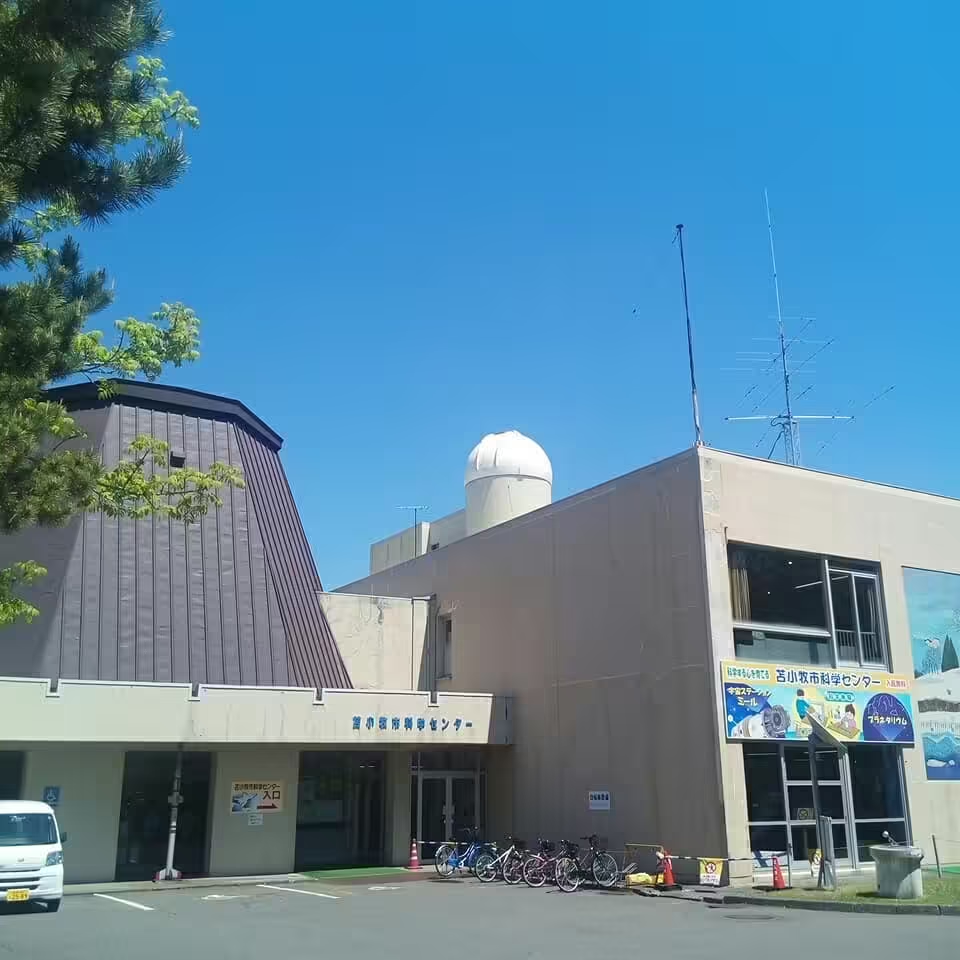
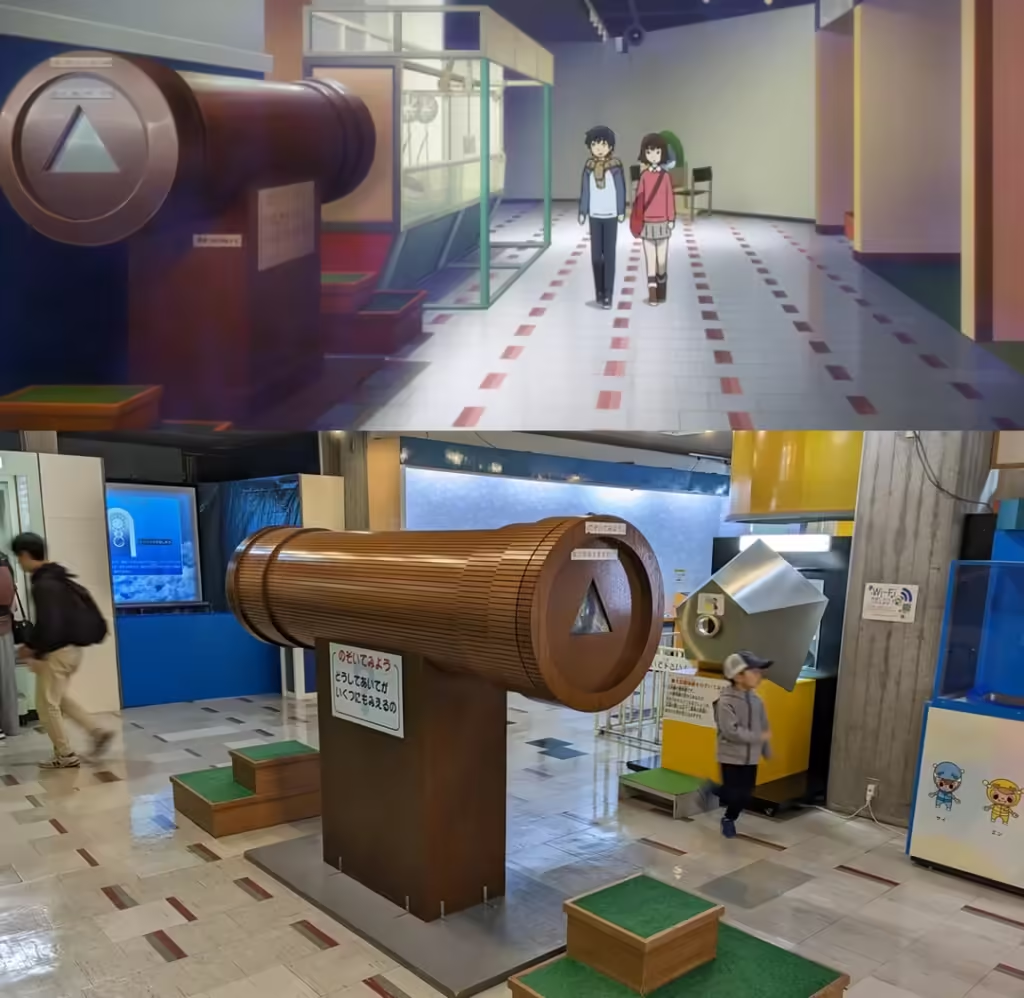
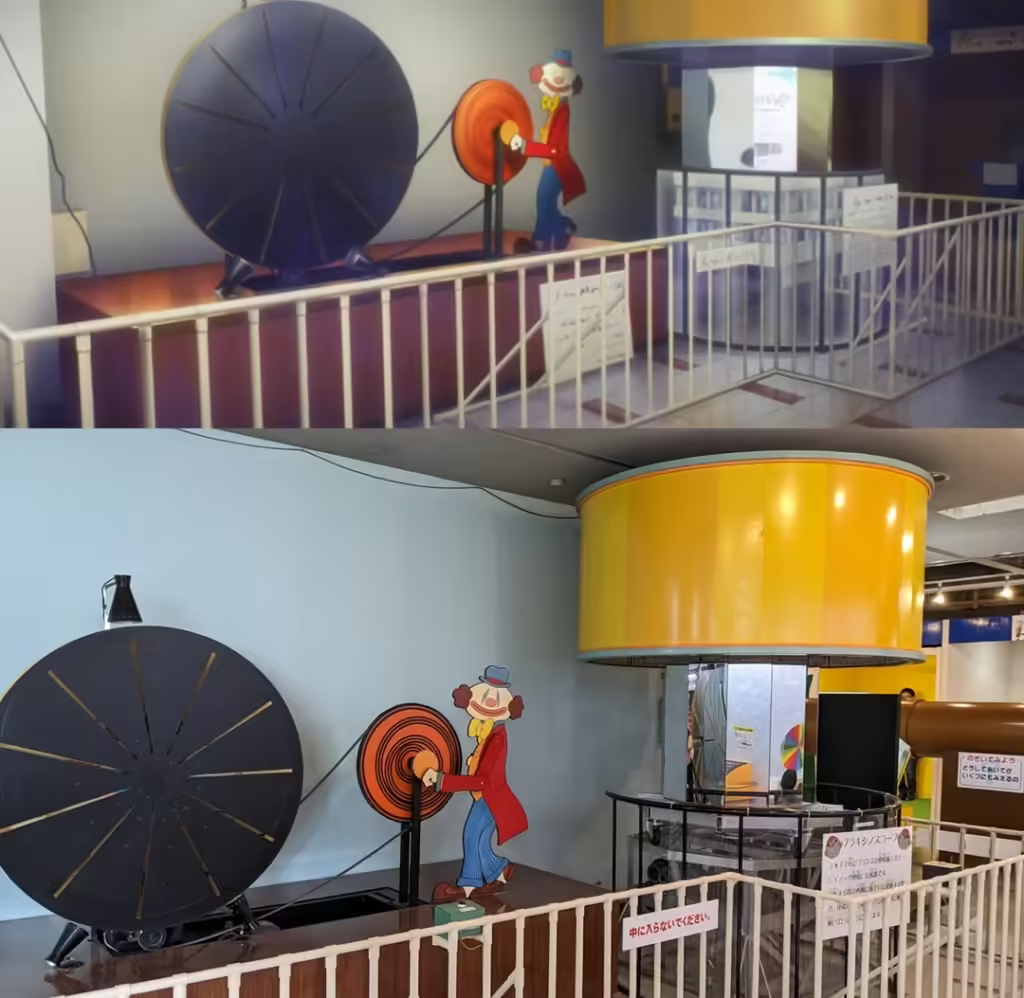
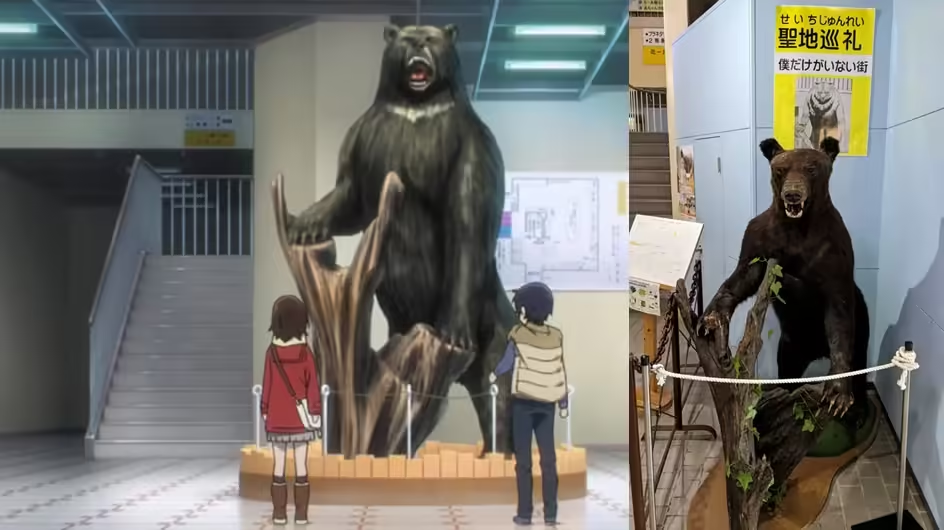
Among the Tomakomai locations often linked to Erased, the Tomakomai City Technology Center is one fans tend to remember most. It’s commonly associated with scenes from episodes four and seven, including the moment where Satoru firmly says, “He’s my friend!” while pointing toward the bear statue.
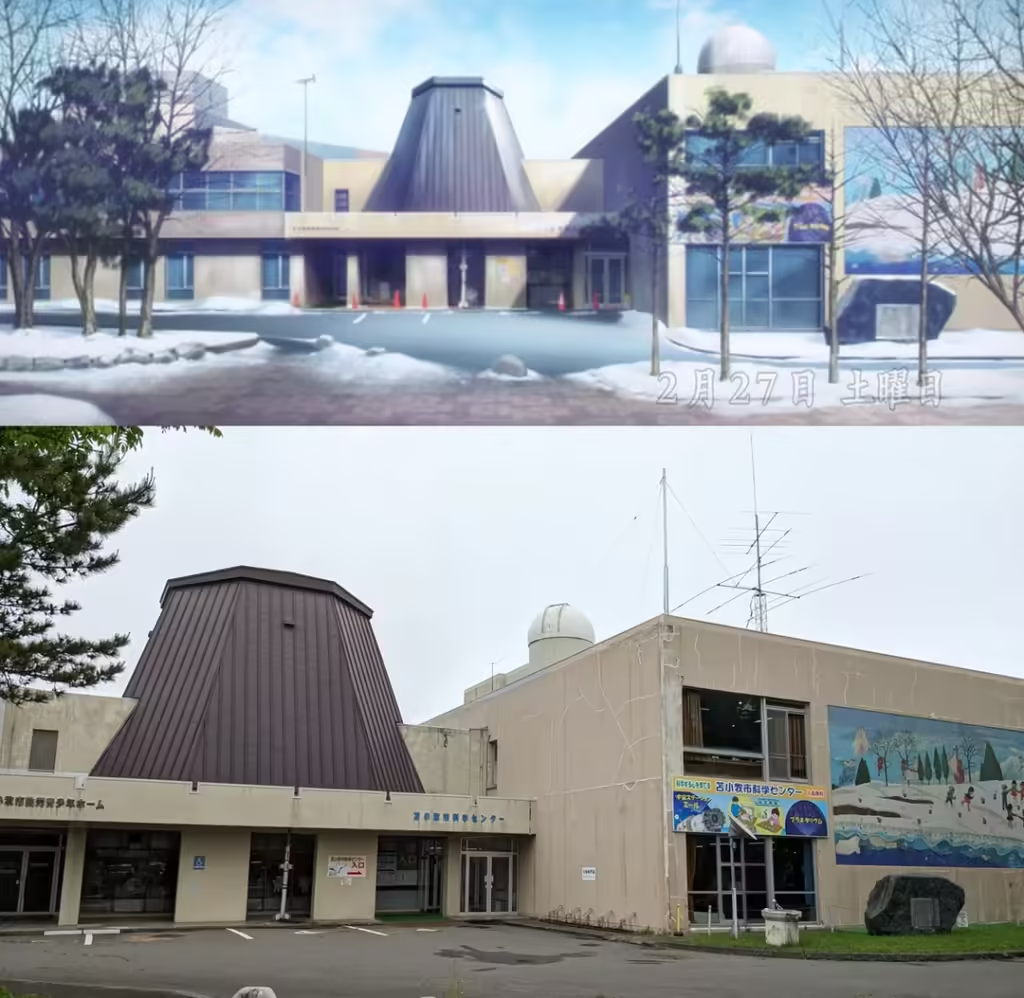
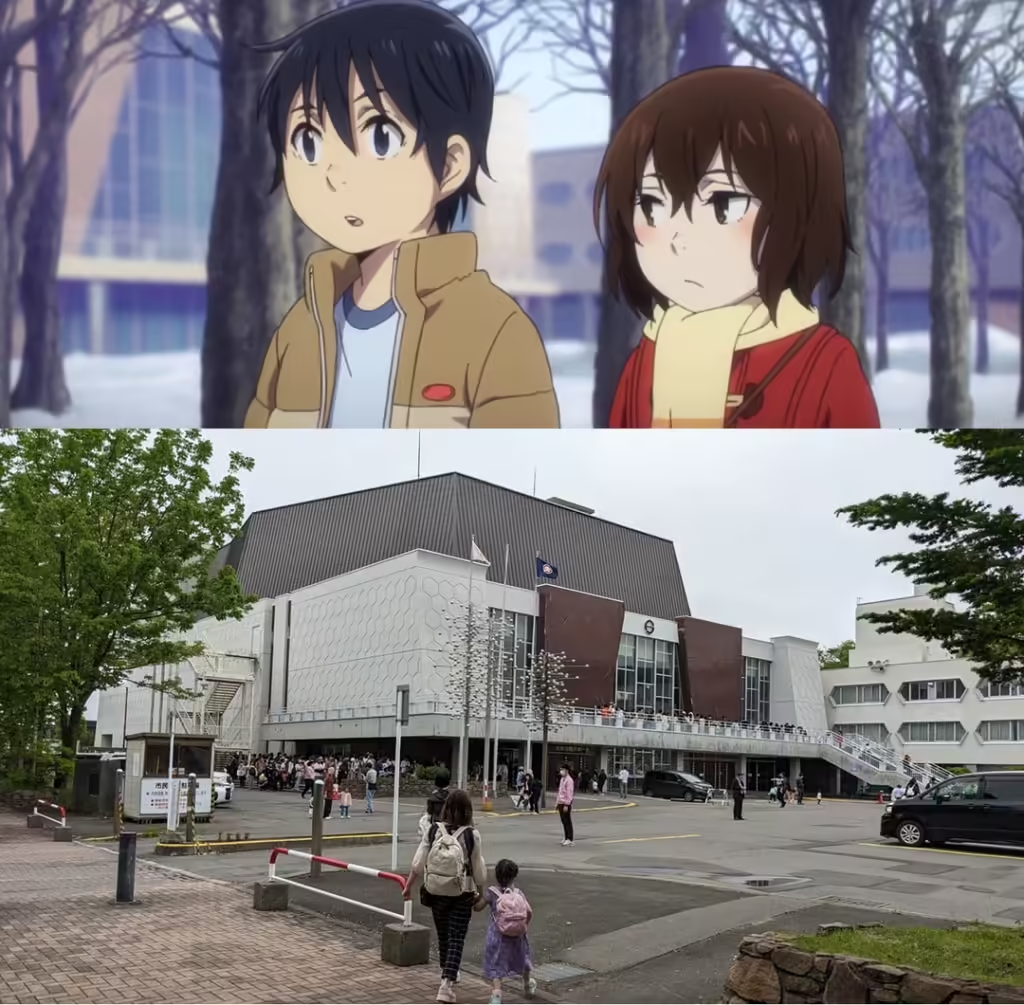
That bear has since become a small piece of local anime history. Originally displayed at the Technology Center, it was later moved to the Tomakomai City Art Museum after Erased gained popularity, complete with a plaque referencing its appearance in the anime. Inside the building, displays like the vintage vacuum-tube television also echo the grounded, everyday atmosphere the series is known for.

Shinichijo-dōri Shotengai
The bear statue seen in Erased was originally displayed inside the Tomakomai City Technology Center. Following the anime’s popularity, the statue was later moved to the Tomakomai City Art Museum, where it is now exhibited with a plaque referencing the series.
Shinichijo-dōri Shotengai is a modest shopping street in Tomakomai that appears briefly in episode four. What makes it interesting isn’t how dramatic it looks, but how normal it feels. Small local shops line the street, and even today, it hasn’t changed much.
That sense of continuity fits Erased perfectly. It’s the kind of place you pass through without thinking twice, which mirrors how the anime treats its environments as part of everyday life rather than standout landmarks.
You may like: Why Anime Studios Struggle Financially
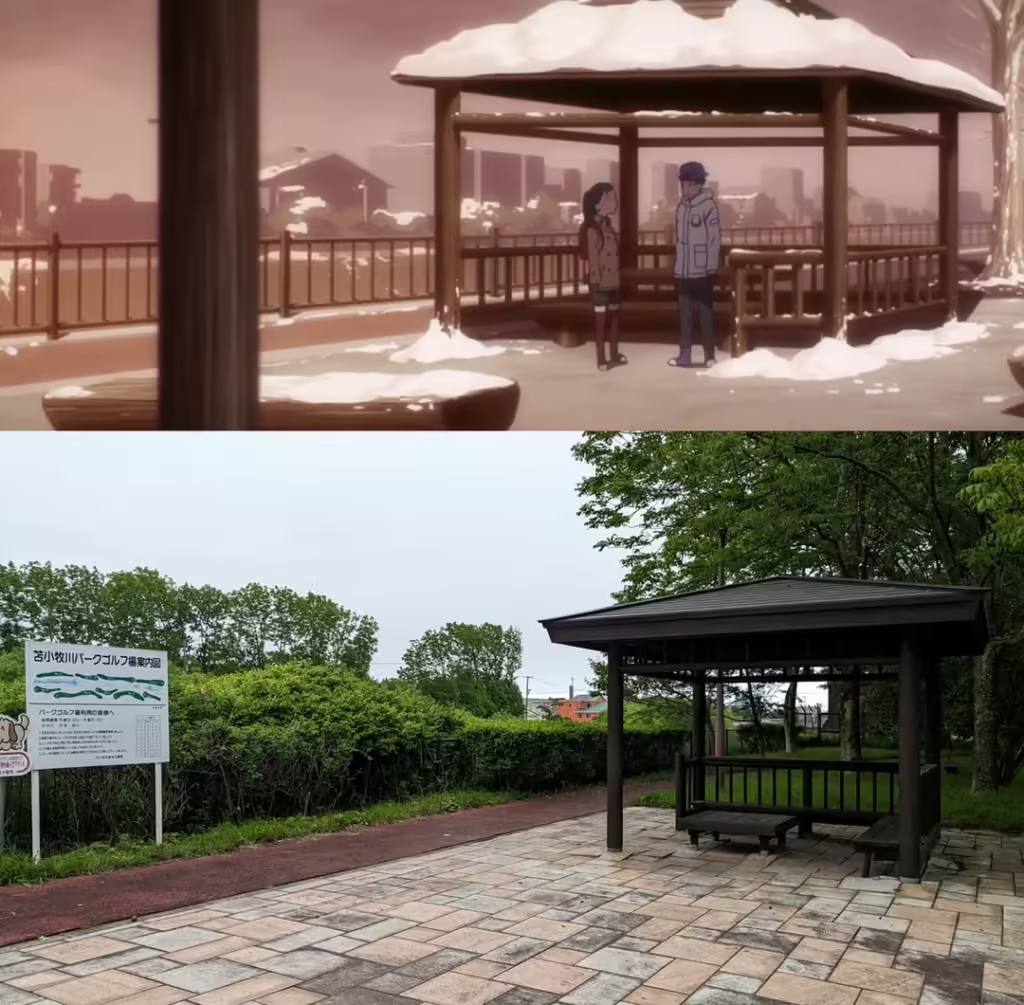
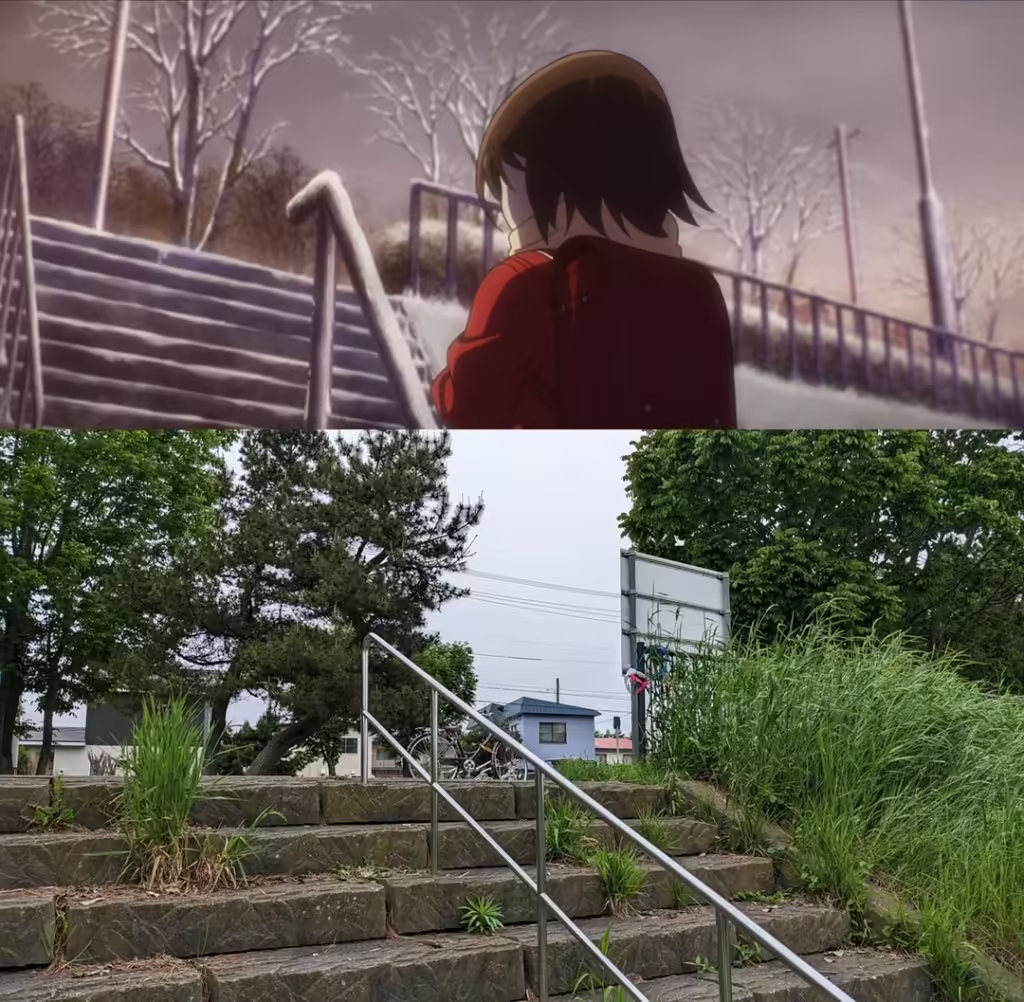
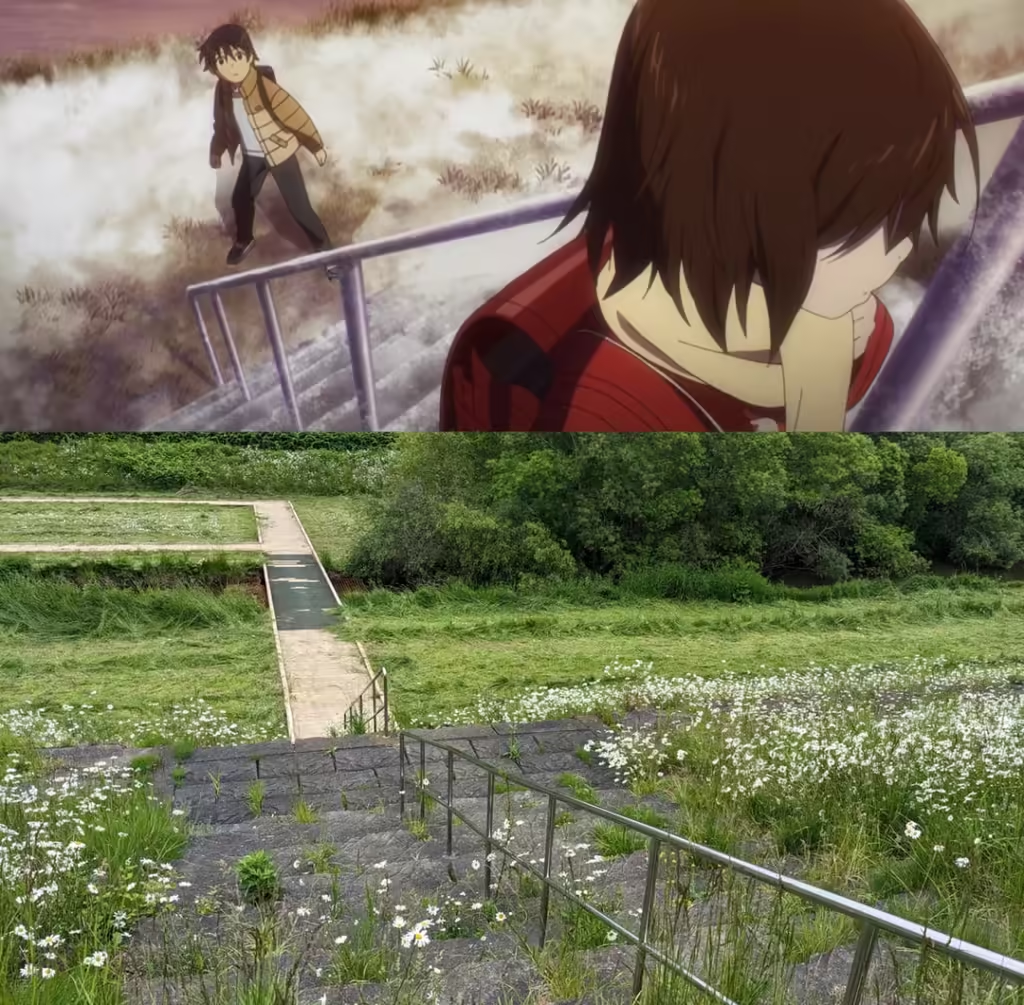
The Riverside Near Taiseichō 2-Chōme
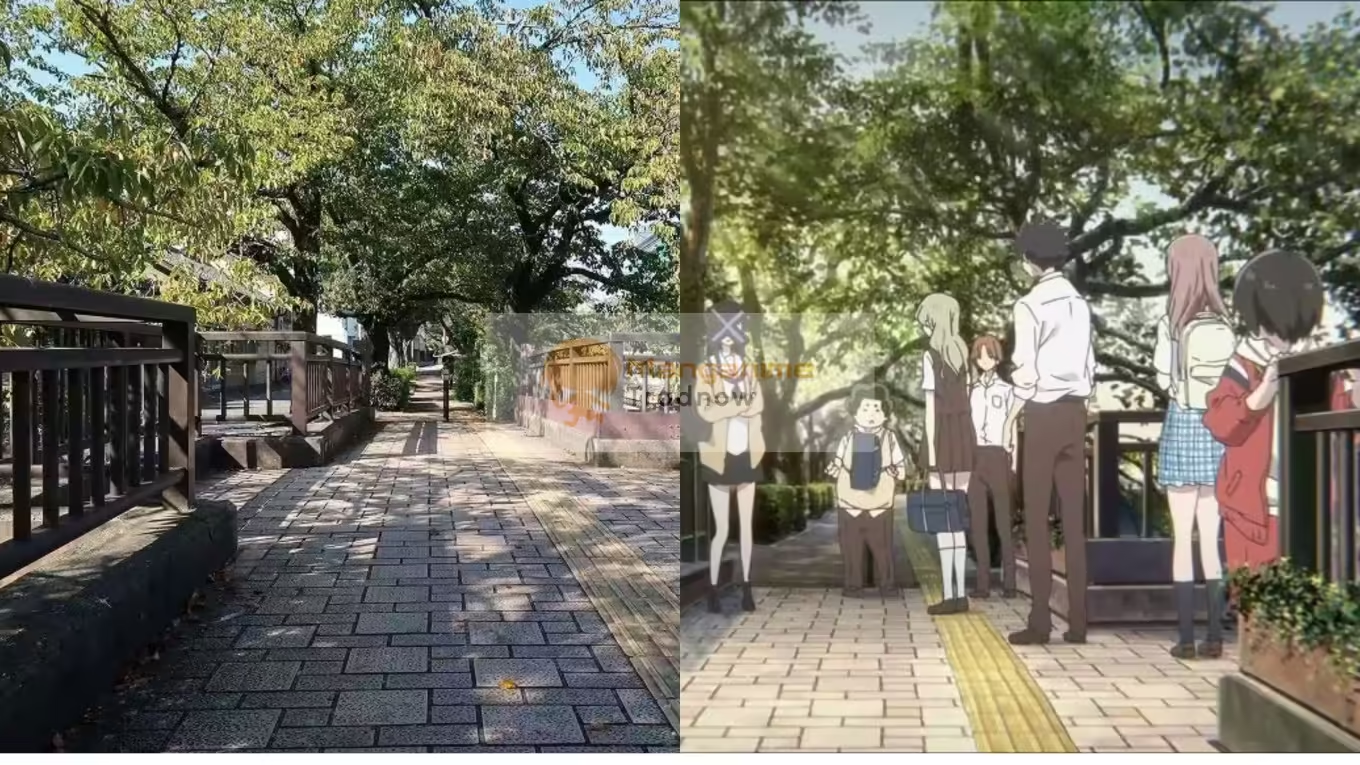
The riverside near Taiseichō 2-chōme is another spot fans often associate with scenes of Satoru and his friends spending time together after school. Open, quiet, and unremarkable at first glance, it reflects the kind of shared spaces where childhood conversations unfold naturally.
Since much of Erased’s childhood timeline takes place in winter, visiting during colder months can make the resemblance feel stronger. Still, even without snow, the riverside captures the same subdued, in-between feeling that defines the series’ setting.
Hokkaido Residential Space and the Logic of Invisibility
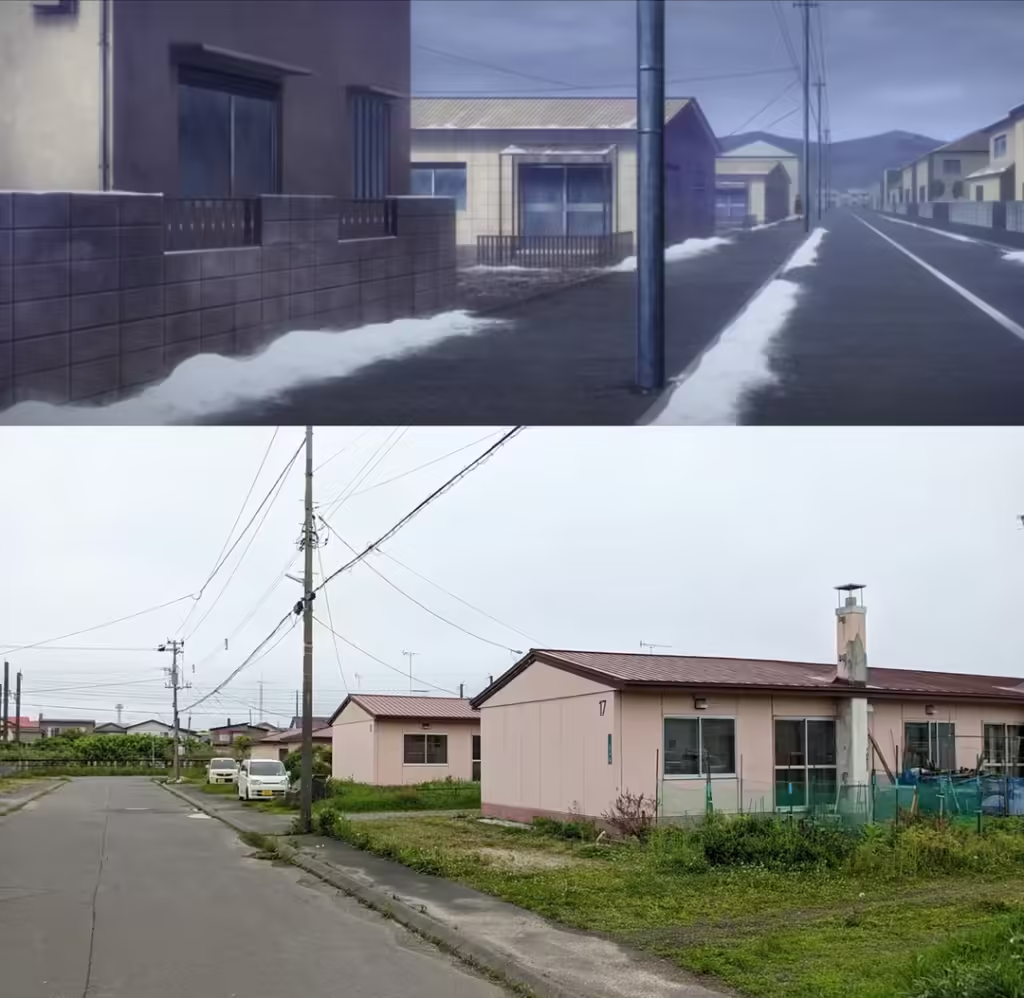
Across Hokkaido, suburban design follows a similar rhythm. Houses are close enough to feel inhabited, yet separated enough to preserve privacy. Fences are low or absent. Streets are open, with long sightlines that paradoxically make people feel less accountable. You can see far, but you are not expected to intervene.

This spatial logic explains why Erased anime setting Japan feels so grounded. Children walking alone is not framed as risky behavior; it is simply how life works in these neighborhoods. Silence does not indicate danger. It indicates routine.
In Boku Dake ga Inai Machi, this environment becomes a silent accomplice. Not because it causes harm, but because it does not interrupt it. The town functions normally while something abnormal unfolds inside it. That contrast is what makes the story so uncomfortable.
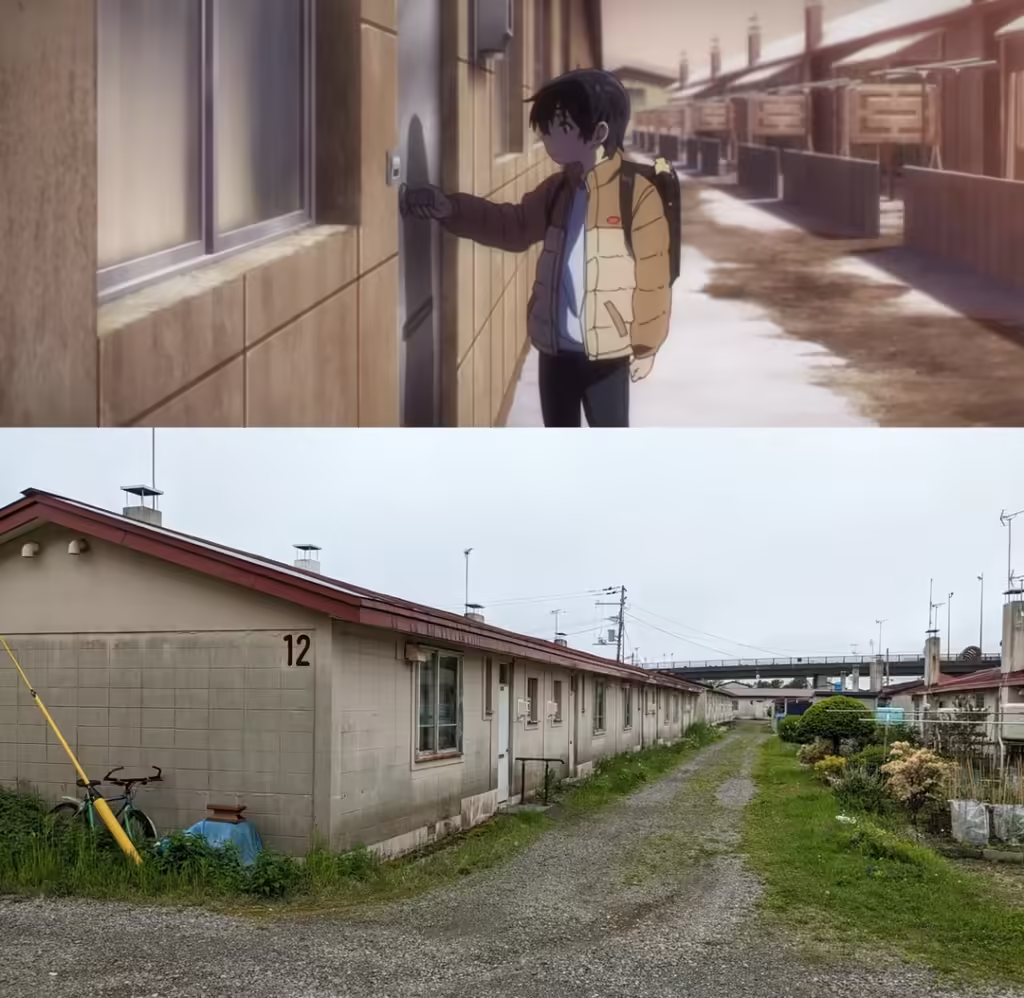
Snow, Distance, and the Stretching of Time
Winter in Hokkaido adds another layer. Snow slows everything down. Walking takes longer. Visibility drops. Sound is muffled. Even urgency feels delayed. This physical slowdown mirrors the emotional delay at the heart of Erased.
When something feels off, reaction is not immediate. There is always another day, another moment, another assumption that things will resolve themselves. The environment encourages waiting, and waiting becomes inaction.
This is why the Erased Hokkaido locations resonate so strongly with viewers. The anime does not exaggerate isolation or emptiness. It reflects the quiet persistence of everyday life in northern Japan, where time stretches and attention drifts.
Map Locations:
- Open Street Map
- Google Map
Why These Places Matter Beyond Tourism
Seen this way, the real-world foundation of Erased is not about visiting a spot or recreating a scene. It is about understanding how ordinary places can carry extraordinary weight. Tomakomai and similar Hokkaido towns are not memorable because they are unique. They are memorable because they are interchangeable.
That interchangeability is the point. Erased reminds us that stories like this do not need extreme settings. They need familiar ones. And that is why its locations matter, not as destinations, but as mirrors of places we already know.
5. Anime vs Reality: What Erased Simplifies — and What It Can’t
One of the reasons Erased feels so grounded is that it simplifies reality just enough to make its themes legible, without ever breaking plausibility. The anime removes clutter. Streets are emptier. Encounters feel more isolated. Time seems to stretch cleanly from one moment to the next.
In real life, places like Tomakomai are messier. There are more cars, more noise, more incidental movement. The quiet is not constant; it comes and goes. But this difference doesn’t weaken the story. It clarifies it. By stripping the environment down to its emotional essentials, Erased makes patterns visible that are harder to notice in everyday life.
The anime also compresses distance. A walk home, a trip to a park, a visit to a public building all feel closer than they would in reality. In practice, these spaces are farther apart, and that distance matters. It introduces hesitation. It creates gaps in time where nothing happens, where decisions are delayed. The real world does not heighten drama; it diffuses it.
What Erased cannot simplify, however, is the logic of neglect. The way adults rely on routines, the way warning signs blend into normality. The way ordinary environments encourage people to assume someone else will notice. These dynamics exist just as clearly outside the anime.
This is where the comparison between anime and reality becomes uncomfortable. The visuals may differ slightly, but the behavior does not. Erased doesn’t exaggerate how harm goes unnoticed. It clarifies it.
You may like: 7 Best Anime Drawing Classes at Anime Art Academy
6. Is Erased a Pilgrimage Anime?
At first glance, Erased seems like it could fit neatly into the category of anime pilgrimage. It has recognizable real-world inspiration, identifiable public spaces, and a town fans naturally want to locate on a map. But the more closely you look, the more that label starts to fall apart.
Pilgrimage anime usually invite repetition. They encourage viewers to stand where a character stood, to recreate a frame, to feel closer to the story through physical proximity. Erased resists that impulse. Its locations are intentionally unremarkable. They are not framed as special or meaningful on their own, and visiting them does not recreate the emotional weight of the scenes they appear in.
That’s because Erased is not about discovery. It’s about recognition. The story doesn’t ask you to find something hidden in a place. It asks you to acknowledge something that was already there and overlooked. Turning its setting into a checklist of stops risks missing the point entirely.
Even when real locations like those in Tomakomai are identified, the experience of being there is often quieter and less dramatic than expected. Streets look normal. Parks feel ordinary. Nothing announces its importance. And that absence of spectacle mirrors the story’s central discomfort: that harm can exist without leaving visible marks on a place.
In this sense, Erased works against the idea of pilgrimage. Its setting matters not because it draws you in, but because it blends in. The anime uses real-world inspiration to strip away distance, not to create destinations. What stays with you is not where the story happened, but the unsettling realization that it could happen almost anywhere.
7. Traveling These Places Respectfully
For readers who still feel drawn to visit the real-world environments behind Erased, restraint matters more than planning. The locations associated with Boku Dake ga Inai Machi are not tourist zones. They are everyday neighborhoods, schools, and public facilities that people continue to use normally.
If you do visit Tomakomai or similar Hokkaido towns, timing makes a difference. Winter reflects the anime’s atmosphere most closely, but it also reinforces how quiet and slow these places truly are. Streets feel longer. Parks feel emptier. That experience can be reflective, but it should never become intrusive.
Photography should be approached carefully, especially around schools and residential areas. Many of the places that resonate in Erased do so precisely because they are ordinary and private. Observing from a distance, rather than documenting aggressively, keeps the experience aligned with the spirit of the story.
Most importantly, visiting these places should not be about recreating scenes. Erased is not asking to be reenacted. It asks to be understood. Walking through a quiet street or standing near a riverside path works best when it becomes a moment of reflection, not proof of presence.
Seen this way, travel becomes secondary. The real takeaway is not that these places exist on a map, but that environments like them exist everywhere.

Show Your Work
Whether you are a professional or an amateur, we will love to see your artwork. So don't hesitate to remove your cats from your box right away