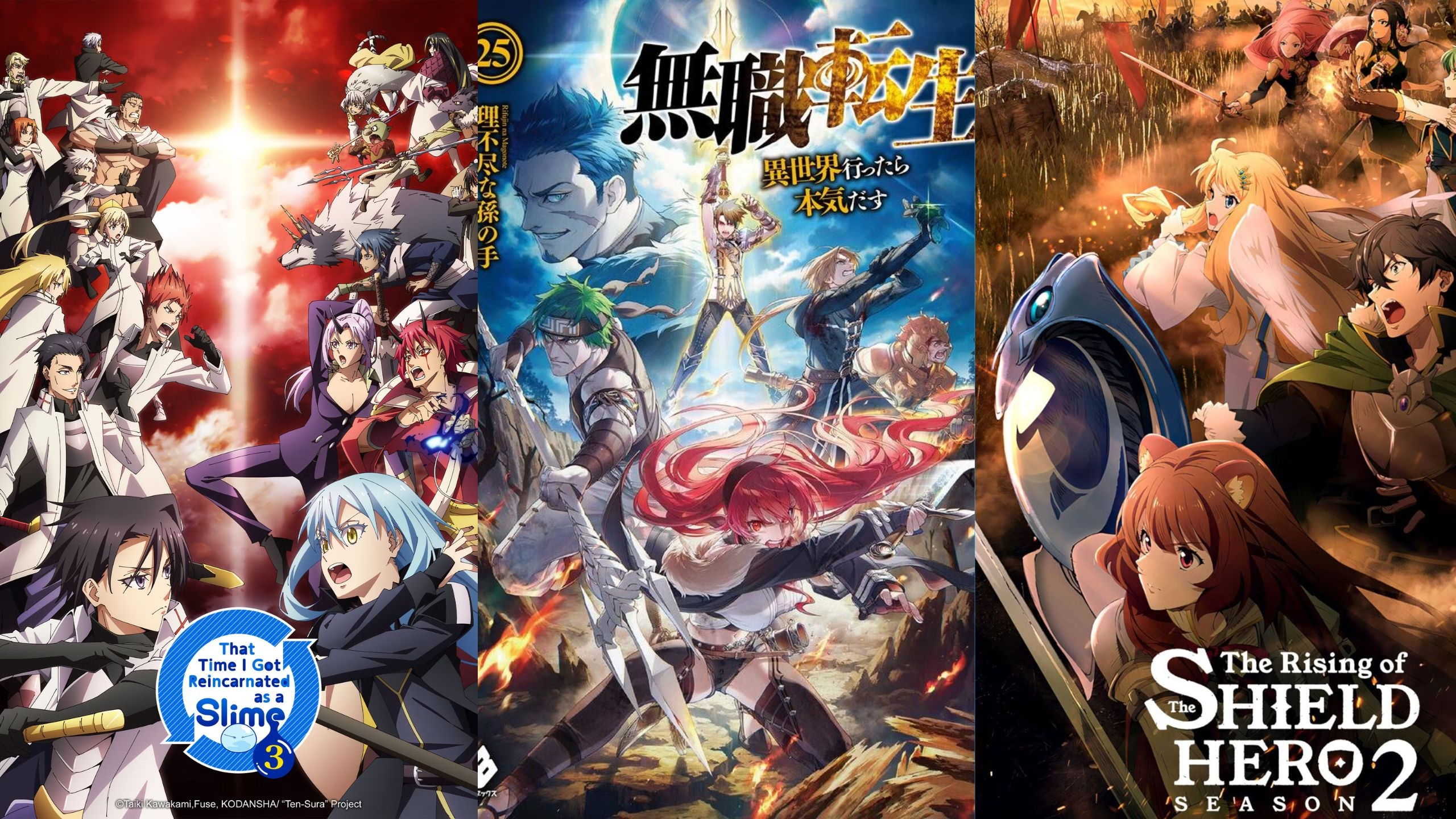
We think we understand isekai.
Another world.
Reincarnation.
A fresh start.
That definition is easy to recognize. And that’s exactly why it’s misleading.
Because the moment you stop looking at where the story takes place and start paying attention to what it actually does, something doesn’t hold up.
A lot of anime follow the same pattern without ever being called isekai. That’s where the definition starts breaking.
Why the Usual Isekai Definition Falls Short
Most people reduce isekai to a setting. A character leaves their world, enters another one, and starts over.
Simple.
But that only works if you ignore everything that doesn’t fit that structure cleanly. And there’s more of that than people realize.
Some stories don’t move the character anywhere but still change everything around them. Some don’t offer a new life but force a completely different one onto them anyway.
And some anime don’t look like isekai at all until you start paying attention to how they actually function.
That’s the part that gets missed.
What Actually Defines the Isekai Feeling
Because what defines the isekai feeling is not the world.
It is the shift.
The moment a character is pulled into something they did not choose, where the rules change, the pressure increases, and survival depends on figuring things out quickly, the story starts behaving like isekai.
Not in appearance.
But in structure.
And once you notice that, it becomes harder to rely on the usual isekai anime definition. Because suddenly, another world starts to feel like just one version of a much bigger idea.
Anime That Show This Pattern Clearly
You can see it in Yu Yu Hakusho, where death does not lead to a new life but to a role the character never asked for.
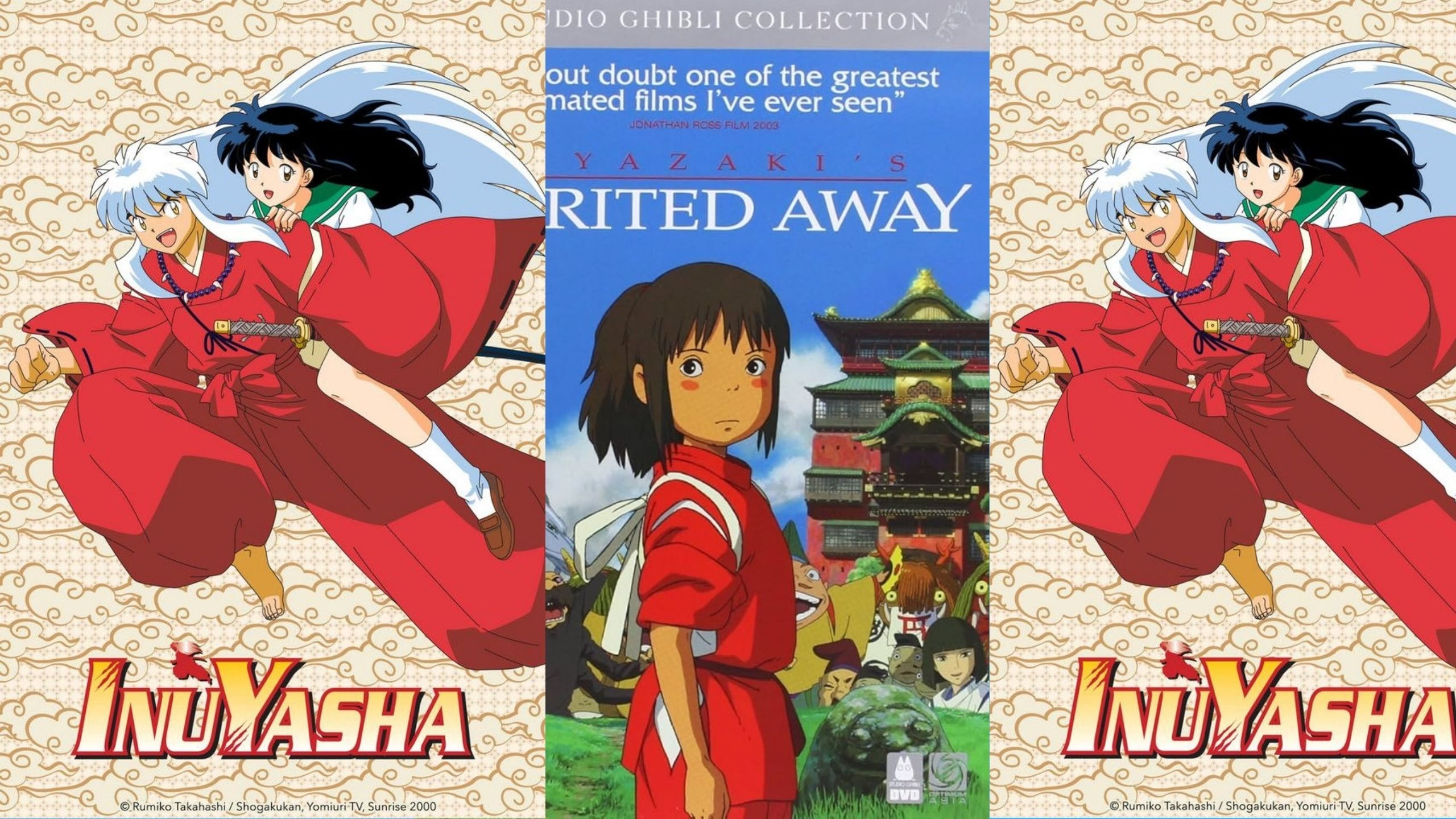
In Spirited Away, where survival replaces comfort almost instantly.
And in Bleach, where reality does not reset, it expands into something harder to navigate.
These stories do not match the standard isekai meaning in anime. This is exactly why some anime feel like isekai without being labeled that way (I explored that idea more in this breakdown of anime that feel like isekai but aren’t).
But they create the same kind of experience. And that is where things start to get interesting.
Where the Isekai Genre Definition Stops Helping
Genres are useful.
They make anime easier to recognize.
They give us a quick way to describe what we’re watching.
But they only work up to a point.
Because the moment you rely on them too much, they start flattening everything into something simpler than it actually is.
And that’s exactly what happens with isekai. When people talk about the isekai genre, they usually describe the setting.
Another world.
A different reality.
A clear separation from normal life.
That definition works on the surface. But it doesn’t explain why so many anime feel similar without fitting into it.
And that’s where the label starts to fall short.
Why the Setting Isn’t the Real Definition of Isekai
Most definitions of isekai focus on where the story takes place. But the setting is only the most visible part.
A new world is easy to recognize.
It gives you a clear signal that something has changed. But that change is not what defines the experience.
What actually defines isekai anime is what happens to the character once that shift occurs.
The moment a character is pulled into something they didn’t choose, where the rules no longer belong to them, the story starts behaving differently.
They have to adapt.
They have to figure things out quickly.
And they don’t get the option to go back to how things were before.
That’s the part that matters.
Because once those elements are in place, the story begins to feel like an isekai, even if nothing about the setting matches the usual definition.
Why Some Anime Feel Like Isekai Without Being One
This is why some anime feel like isekai without ever being labeled that way.
Not because they look the same. But because they create the same kind of pressure.
The same loss of control.
The same need to adjust.
The same shift in how the character exists inside the story.
Once you start noticing that, the boundary between isekai and non-isekai starts to feel less clear.
It becomes harder to separate them based only on the setting.
And that’s exactly why some anime end up sitting right on that line, even if they were never meant to be part of the genre.
What This Changes About How We See Isekai Anime
This is where the definition of isekai starts to shift.
It stops being just about worlds. And starts being about structure.
About what the story does to the character.
About how it removes control and replaces it with something unfamiliar.
The label doesn’t change. But what it represents becomes much broader.
And once you see that, it becomes difficult to go back to the simpler version of what isekai anime is supposed to mean.
The Part That Changed How I See Isekai
At some point, I stopped trying to define isekai. Not because the definition is wrong.
But because it felt incomplete. What changed for me wasn’t learning a better explanation.
It was noticing how many anime were already doing the same thing without ever being called isekai.
Stories where the character doesn’t leave their world, but still loses control of it.
Stories where nothing looks different on the surface, but everything feels different underneath.
That’s when the label started to matter less.
Not because it’s useless.
But because it doesn’t explain as much as we think it does.
Once you start looking at structure instead of category, the pattern becomes harder to ignore.
And it shows up in more places than you expect.
Bringing It Back to Isekai Anime
This is why the question “what is isekai anime” is harder to answer than it looks.
If you define it only by setting, the answer feels simple.
Another world. A different life.
But if you define it by experience, the boundaries start to blur.
Because what makes an anime feel like isekai isn’t just where it takes place.
It’s what happens to the character once they’re inside it.
And that’s why some stories fit the definition perfectly, while others sit just outside it but still feel the same.
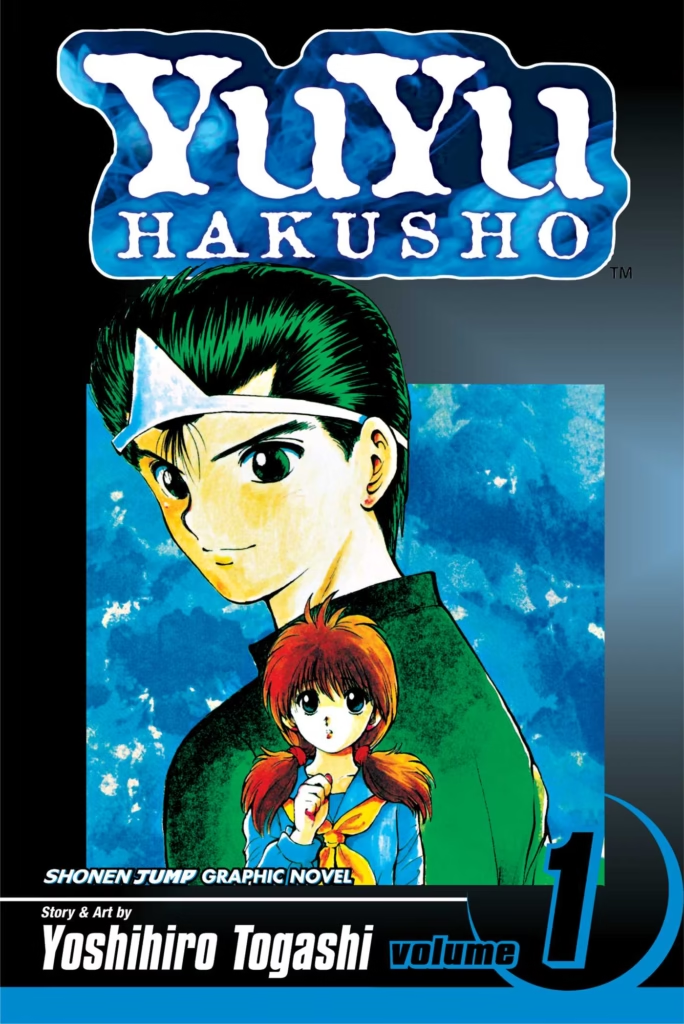
It also explains why something like Yu Yu Hakusho ends up sitting right on that line between genres.
Final Thought
At some point, the question changes.
It stops being:
“Is this an isekai?”
And becomes:
“Why does it feel like one?”
And once that shift happens, it’s hard to go back.
Because you start seeing the same pattern in places you didn’t expect.
Isekai didn’t invent that idea.
It just made it visible.
What Do You Think?
Do you define isekai by where the story takes place or by what it does to the character?
Show Your Work
Whether you are a professional or an amateur, we will love to see your artwork. So don't hesitate to remove your cats from your box right away