Some anime are basically isekai in everything but name, and we ignore them because of labels. Not because they’re different. Because we’ve been trained to recognize the label, not the pattern.
And once you notice it, it gets uncomfortable. Because suddenly, “isekai” stops feeling like a genre… and starts feeling like a simplified version of something anime has been doing for a long time.
You don’t actually need another world for a story to feel like isekai.
You don’t need reincarnation, you don’t need a fantasy kingdom.
What you need is much simpler, and honestly, more interesting: A character gets pulled into a system they didn’t choose… and everything changes.
The rules.
The pressure.
Who they are allowed to be.
That’s the part most people overlook.
What you need is much simpler—and honestly, more interesting:
A character gets pulled into a system they didn’t choose… and everything changes.
The rules.
The pressure.
Who they are allowed to be.
That’s the part most people overlook.
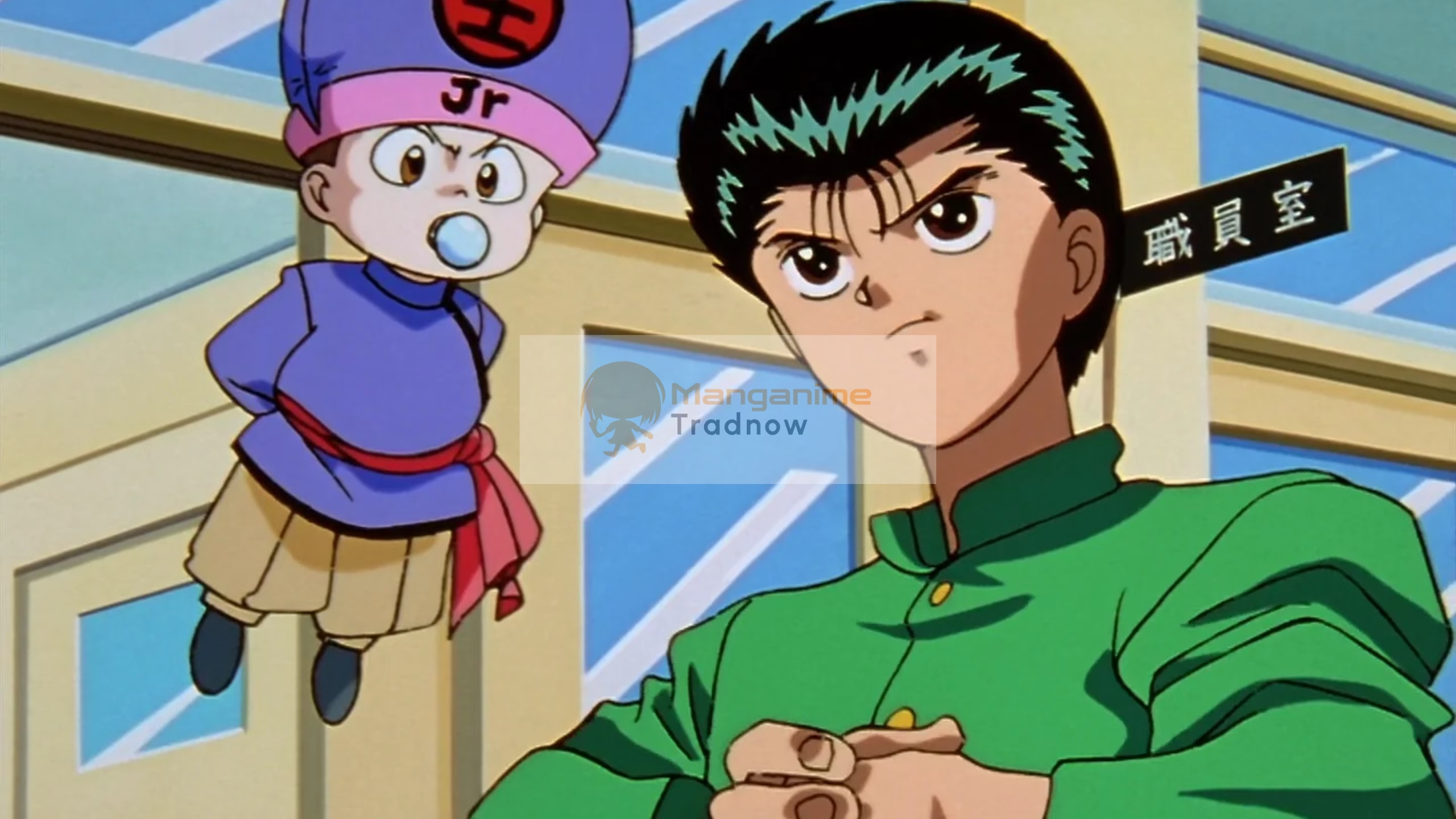
1. Yu Yu Hakusho
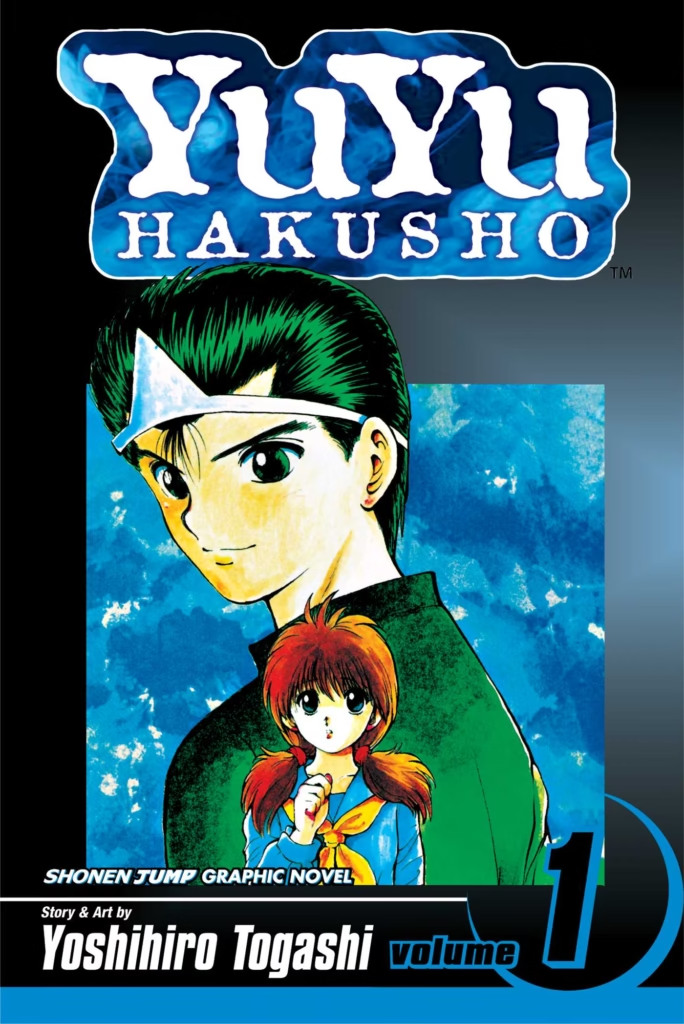
Yusuke’s death isn’t just a dramatic opening.
It’s a break.
One moment, he’s just a delinquent drifting through life.
Next, he’s pulled into a system that doesn’t care who he used to be.
Spirit World.
Spirit Detective.
Rules that don’t explain themselves.
And that shift happens fast.
This is where Yu Yu Hakusho does something interesting.
It doesn’t present the change like a typical isekai. There’s no clean separation, no “welcome to a new world” moment.
Instead, it just drops Yusuke into it and expects him to figure it out.
Most modern isekai makes that transition obvious—almost too obvious.
New world. New identity. Clear reset.
Here, it’s messier.
Yusuke isn’t permanently transported anywhere.
He moves between the Human World, the Spirit World, and eventually the Demon World.
But functionally?
He’s no longer operating under normal rules.
And that’s the part that changes how the story feels.
Because once you stop focusing on where he is—and start paying attention to what changed—
it starts to look very familiar.
A character pulled out of his normal life.
Forced into a system he didn’t choose.
Trying to survive something he doesn’t fully understand yet.
That’s the same core pull that defines isekai.
This is also why people start rethinking why Yu Yu Hakusho feels so close to isekai once they actually look at how the story works.
And here’s where it gets a little uncomfortable.
This version of the idea feels more grounded than a lot of modern isekai.
Not because it’s more complex.
But because it doesn’t rely on escape.
It doesn’t give Yusuke a new life to start over.
It forces him to deal with the one he already had just under completely different rules.
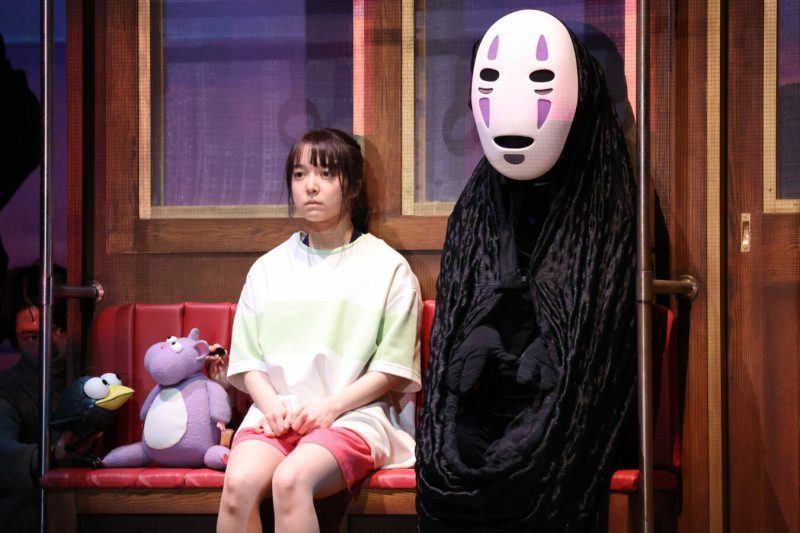
2. Spirited Away
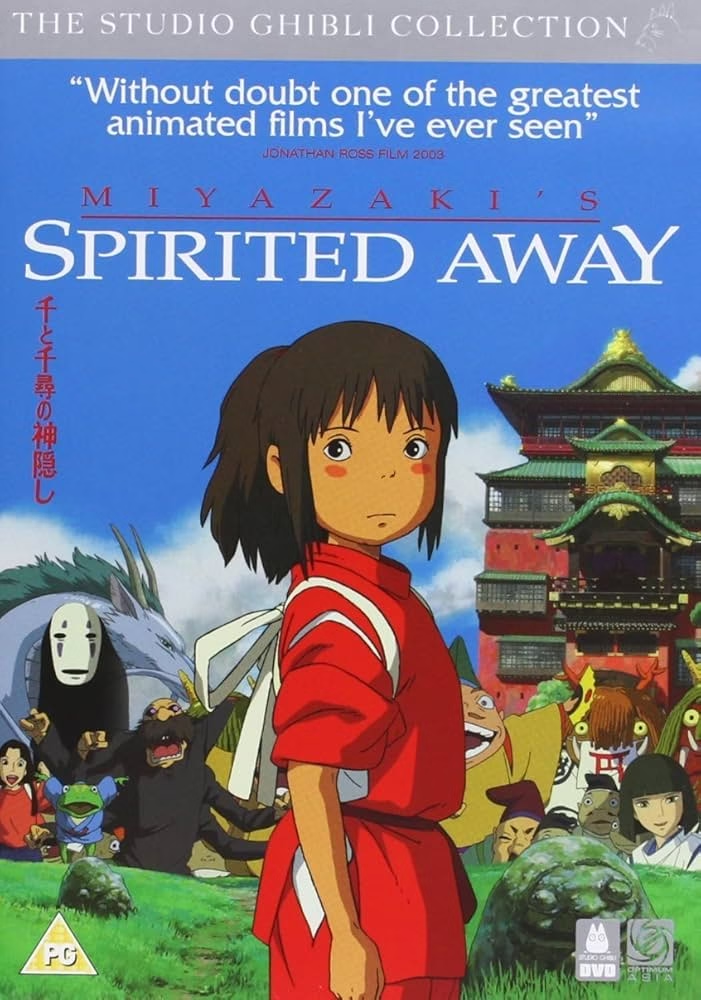
If one anime on this list comes closest to the core idea without using the label, it’s Spirited Away.
And somehow, it still gets overlooked in this conversation.
Chihiro isn’t introduced to a new world.
She’s dropped into it.
No explanation, no rules laid out, no sense that things will make sense anytime soon.
Just a place that expects her to adapt or disappear.
That’s what makes it different.
Spirited Away doesn’t treat the shift like an adventure.
It treats it like pressure.
Nothing about this world is designed for her.
Names can be taken.
Identity can be erased.
And survival depends on learning rules that no one fully explains.
This is what a lot of modern isekai tries to recreate but often without the same sense of risk.
Because here, there’s no guarantee things will work out.
No hidden advantage.
No slow climb to control.
Chihiro doesn’t master the world.
She learns how to exist in it.
And that’s a very different kind of story.
3. Bleach
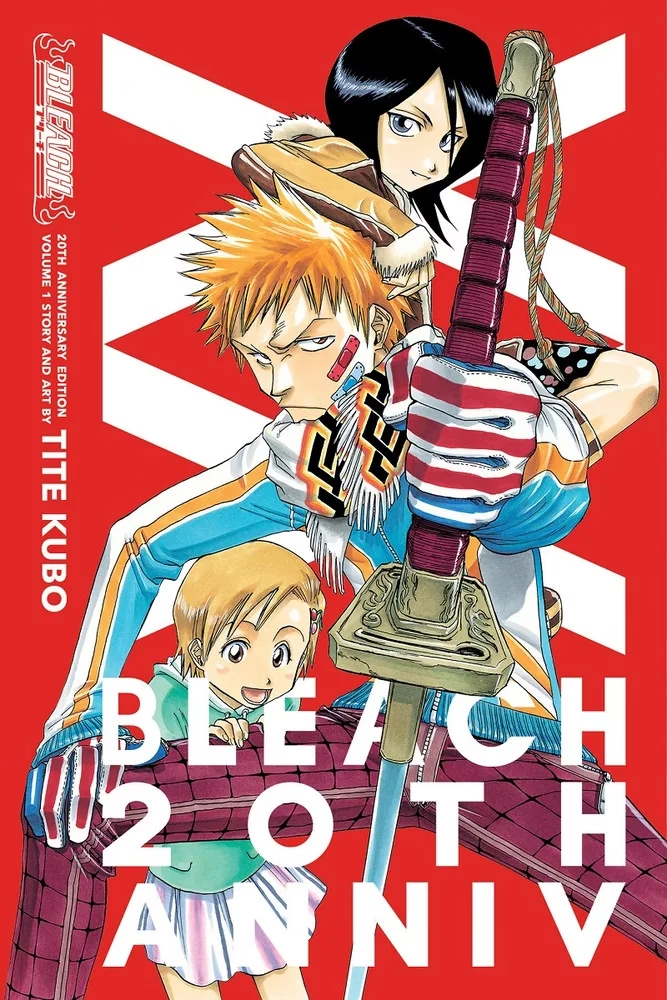
Bleach doesn’t send its protagonist somewhere else.
It shows him he was never seeing the full picture.
And that changes everything.
Once Ichigo becomes a Soul Reaper, his world doesn’t disappear—it expands.
What used to feel like normal life becomes just one layer of something much larger.
Soul Society.
Hollows.
A structure that exists whether he understands it or not.
That’s where it starts to feel like isekai.
Not because he travels but because the rules change around him.
And unlike most isekai, there’s no reset.
No clean break from his old life.
He doesn’t leave anything behind he carries all of it into something more complicated.
Which makes it harder than it looks.
Because there’s no escape here.
No second life to rely on.
Just a wider system that keeps pulling him deeper into it.
And honestly, this version of the idea hits harder than a lot of modern isekai.
Because it doesn’t simplify the transition.
It complicates it.
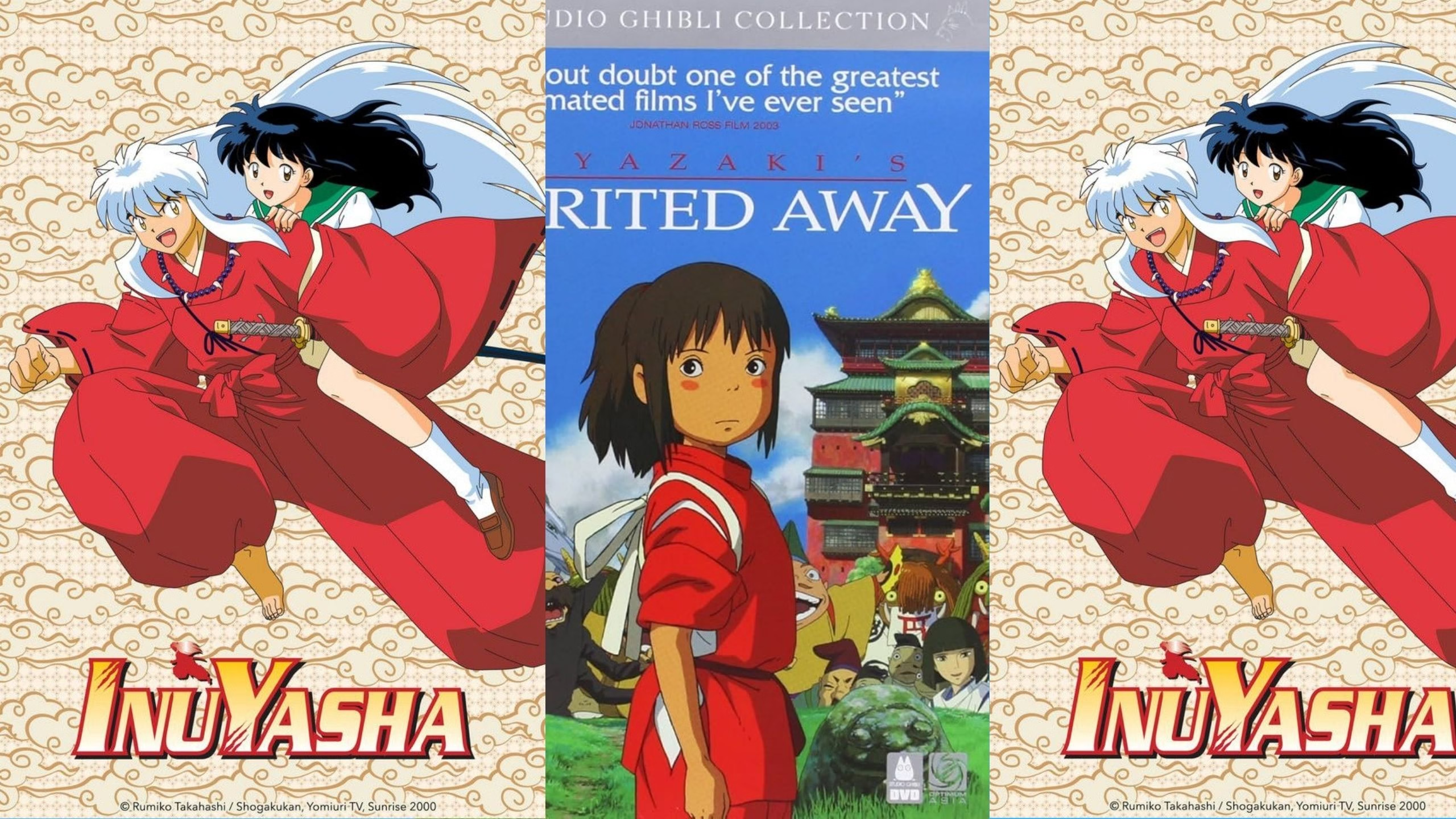
4. Inuyasha
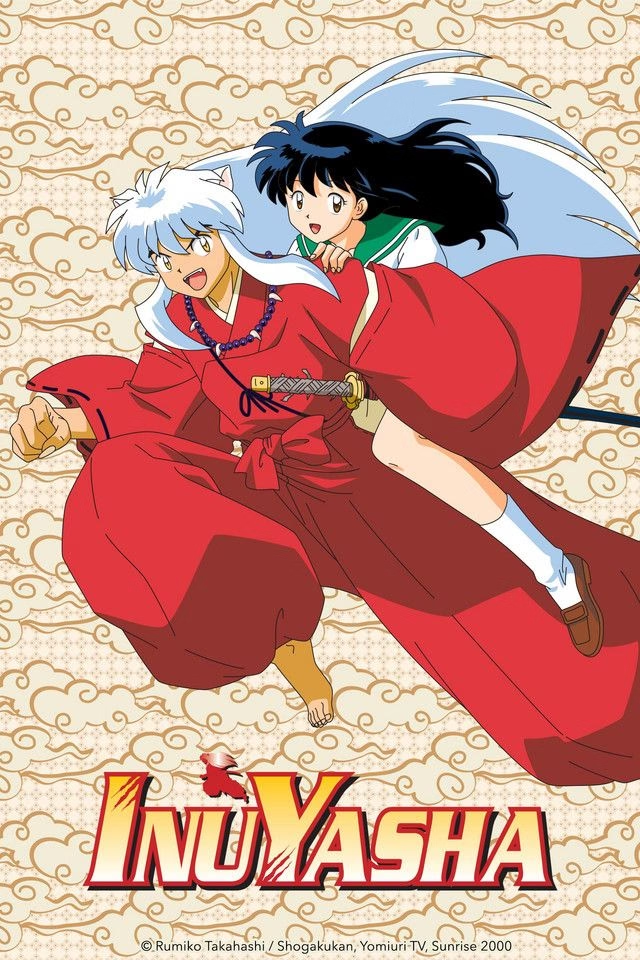
Inuyasha is usually treated as time travel.
But the more I think about it, that label doesn’t really explain how it feels.
Kagome doesn’t just visit another era.
She has to exist in it.
And that changes everything.
The rules are different.
The dangers are immediate.
And nothing in that world adjusts to make things easier for her.
She’s the one who has to adjust.
At some point, I stopped thinking of it as “time travel” and started seeing it as something closer to displacement.
Because the experience isn’t about moving through time.
It’s about being pulled into a system that doesn’t care where you came from.
And once you look at it that way, it becomes harder to separate it from the same feeling you get in isekai anime.
Not because the setting is identical, but because the pressure is.
5. Made in Abyss
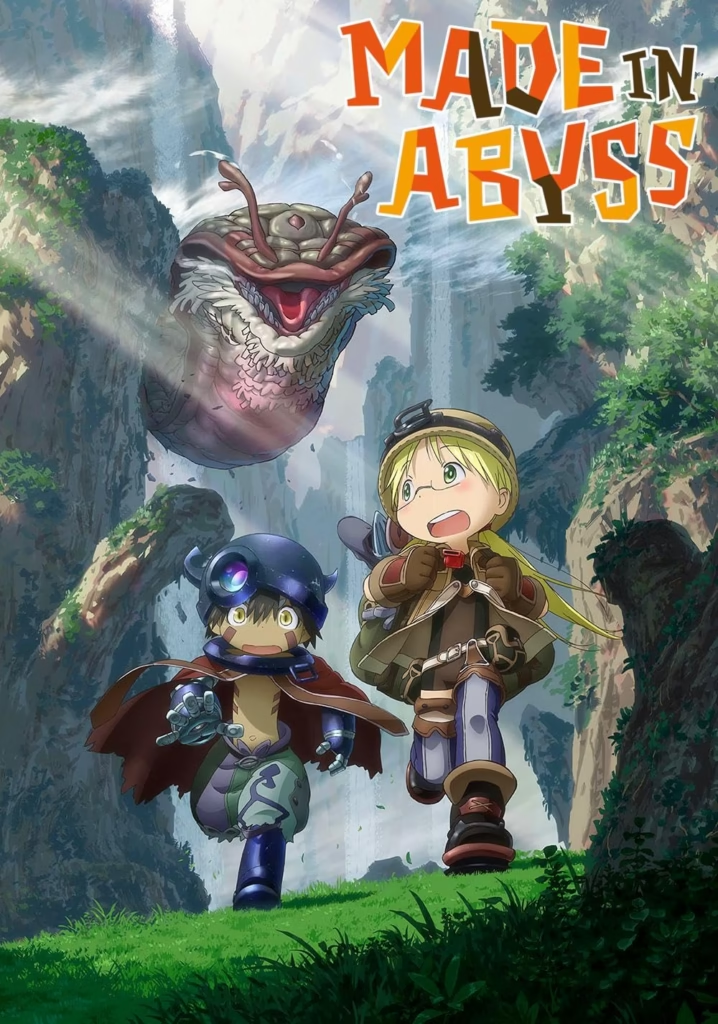
Made in Abyss doesn’t look like an isekai.
And that’s exactly why it works here.
There’s no portal.
No “new world” introduction.
Just a place that gets more unforgiving the deeper you go.
What makes it stand out to me is how quickly the idea of freedom disappears.
At the start, it feels like exploration.
By the time you understand the Abyss, it doesn’t feel like that anymore.
Because every layer changes the rules.
And at some point, going back stops being a real option.
A lot of isekai stories are built around the idea of starting over.
Made in Abyss does the opposite.
It traps you in the decision to move forward.
And that creates a different kind of tension.
Not “what will happen next?”
But:
“How far can they go before they can’t come back?”
That’s the part that makes it feel closer to isekai than it should.
Not the world itself, but the way it reshapes the character inside it.
6. Noragami
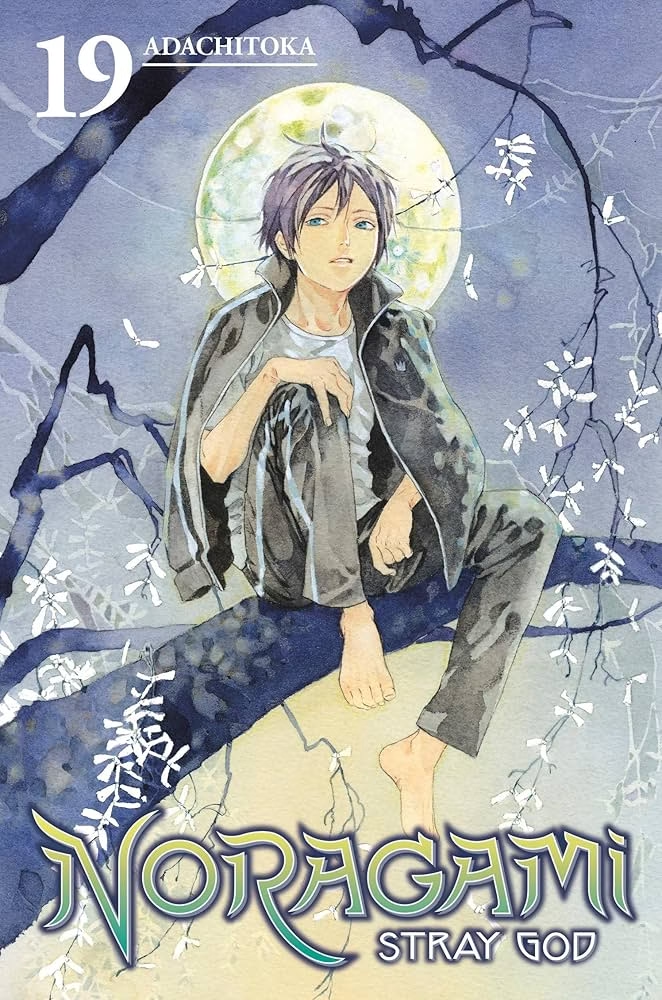
Noragami doesn’t send its characters anywhere.
It changes what they’re able to see.
And that’s enough.
The moment the hidden side of the world becomes visible, gods, spirits, everything underneath normal life, the rules shift.
Not physically.
But functionally.
What I like about this one is how subtle the transition is.
There’s no clear “before and after.”
Just a point where the character realizes reality is bigger than they thought.
And from there, they’re no longer operating under the same assumptions.
It’s easy to overlook this kind of shift because nothing “dramatic” happens on the surface.
But structurally, it does the same thing:
It puts the character in a system they didn’t choose and expects them to deal with it.
What Actually Connects These Anime
At first glance, these anime don’t seem related.
Different worlds, different genres, different types of stories.
But when you stop looking at where they take place and start looking at what they do to the character, something lines up.
They all remove control.
Not slowly.
Not in a way the character can easily adapt to.
They drop the character into a system that doesn’t belong to them and expect them to figure it out anyway.
That’s the part that matters.
Whether it’s a spirit world, a hidden layer of reality, a different era, or something deeper and harder to define…
The structure is the same:
- The character is displaced
- The rules change
- And survival depends on adapting to something unfamiliar
That’s why they feel like isekai.
Even when they’re not labeled that way.
The Part That Changed How I See It
At some point, I realized the issue isn’t the anime.
It’s how we talk about it.
Genres are useful.
They help you recognize things quickly.
They give you a shortcut to understand what you’re about to watch.
But they also make it easy to stop looking deeper.
Because once something is labeled “isekai”… or “not isekai”…
Most people don’t question it anymore.
And that’s where it becomes limiting.
Because two anime can feel almost identical in how they work—
the same kind of pressure, the same kind of shift, the same kind of transformation—
…and still be placed in completely different categories.
Not because they’re fundamentally different.
But because they don’t match the surface definition.
Once I started paying more attention to structure instead of labels, a lot of things became clearer.
Not more complicated.
Just more honest.
And that’s when anime like Yu Yu Hakusho stopped feeling like an exception—and started feeling like part of a pattern.
At some point, the question stops being:
“Is this an isekai?”
And becomes:
“Why does it feel like one?”
Because once you start noticing that pattern, characters being pulled into systems they don’t control, forced to adapt, reshaped by it, you start seeing it in more places than you expected.
Not just in obvious isekai.
But in stories that were never labeled that way.
And that’s what makes it interesting.
Isekai didn’t invent that idea.
It just made it easier to recognize.
What Do You Think?
Which anime has given you that same feeling even without the label?
Show Your Work
Whether you are a professional or an amateur, we will love to see your artwork. So don't hesitate to remove your cats from your box right away